
THE FDE VIDEO LIBRARY
FDE interview videos
& course lessons.
Prepare for forward deployed engineer interviews with animated concept explainers, worked answers and full course lessons. Choose a topic for a quick explanation, or follow a course lesson by lesson. Each video links to its written page.
Videos on this site follow the access requirements of their written pages. Premium lessons require Premium access.
210 video lessons · 24h 13m in total · English narration
Subscribe on YouTubeFoundations of LLMs & GenAI
Explore this topic → 3:24
Tokenization & Tokens
Watch the explainer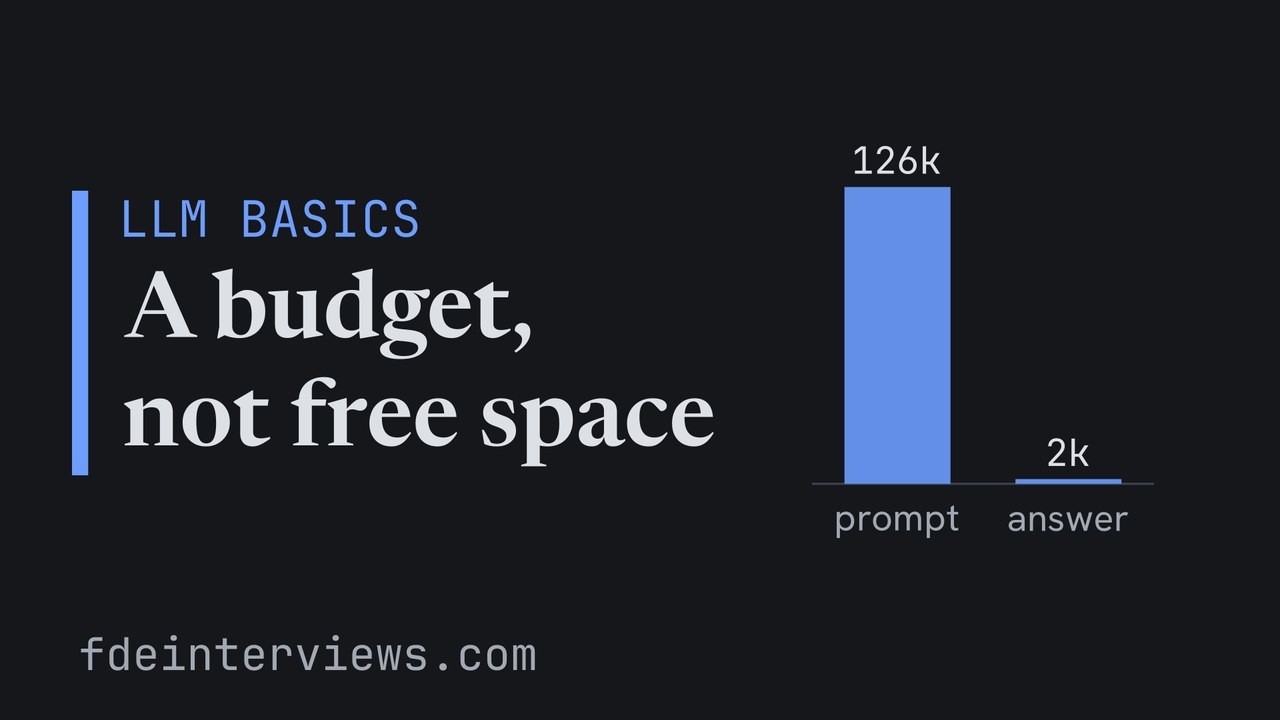 3:05
The Context Window
Watch the explainer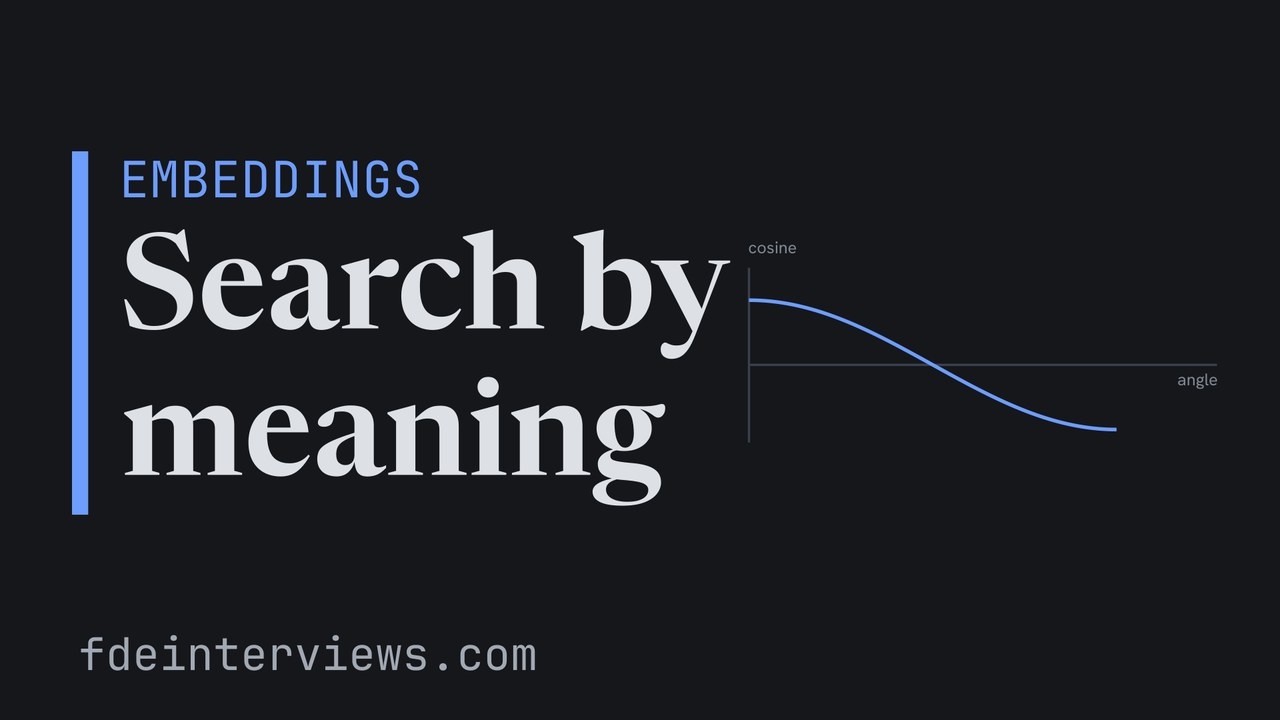 3:21
Embeddings & Vector Representations
Watch the explainer 3:16
The Transformer, Intuitively
Watch the explainer 3:20
Temperature, Top-p and Sampling
Watch the explainer 3:24
Prompt Engineering
Watch the explainer 3:19
Why LLMs Hallucinate
Watch the explainer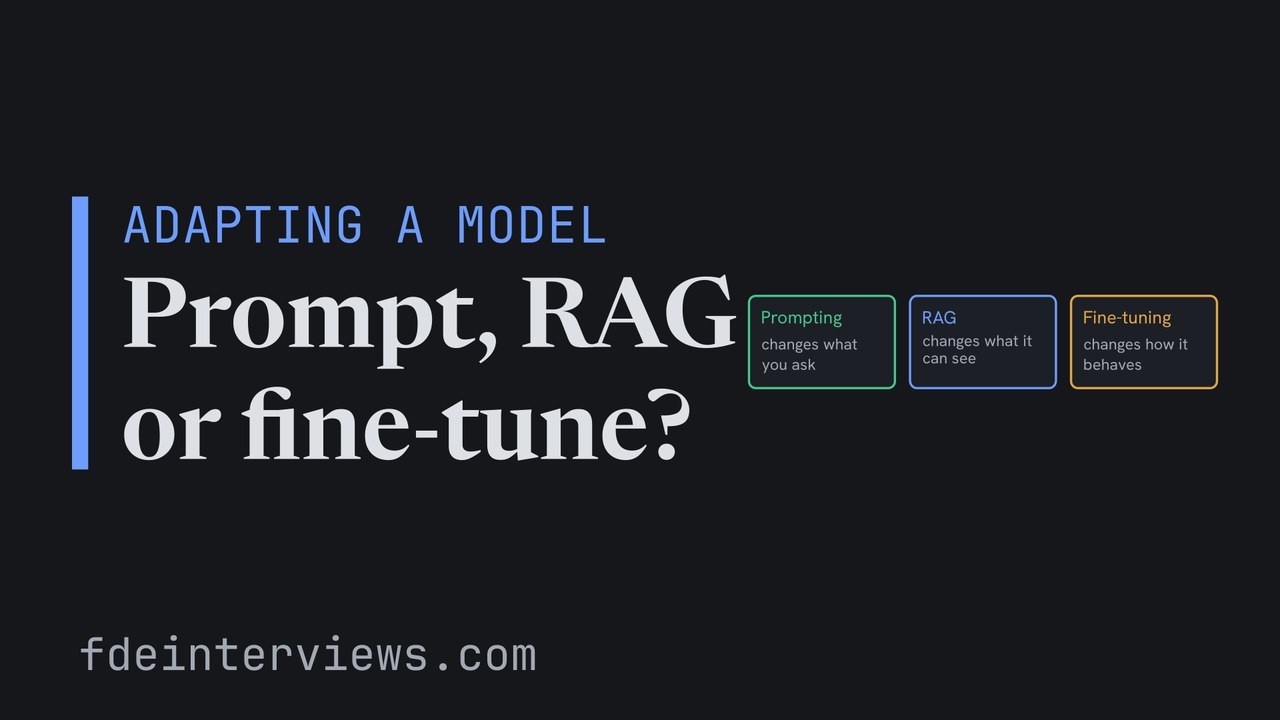 3:23
Fine-tuning vs RAG vs Prompting
Watch the explainer 3:22
Autoregressive Decoding
Watch the explainer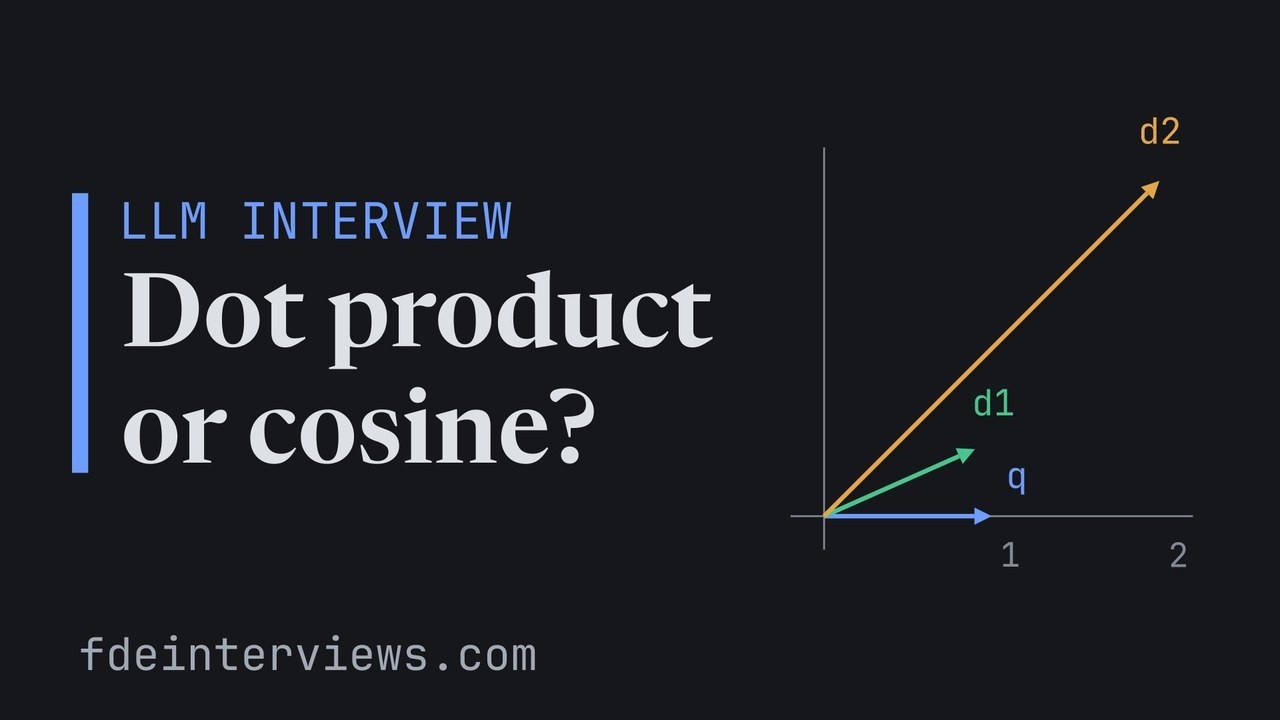 3:40
Dot product vs cosine similarity: when magnitude quietly breaks your retrieval
Watch the explainer 3:10
Base model vs instruct model: the difference, and why a customer should care
Watch the explainerRetrieval & Agents
Explore this topic → 3:21
Retrieval-Augmented Generation (RAG)
Watch the explainer 3:19
Vector Databases
Watch the explainer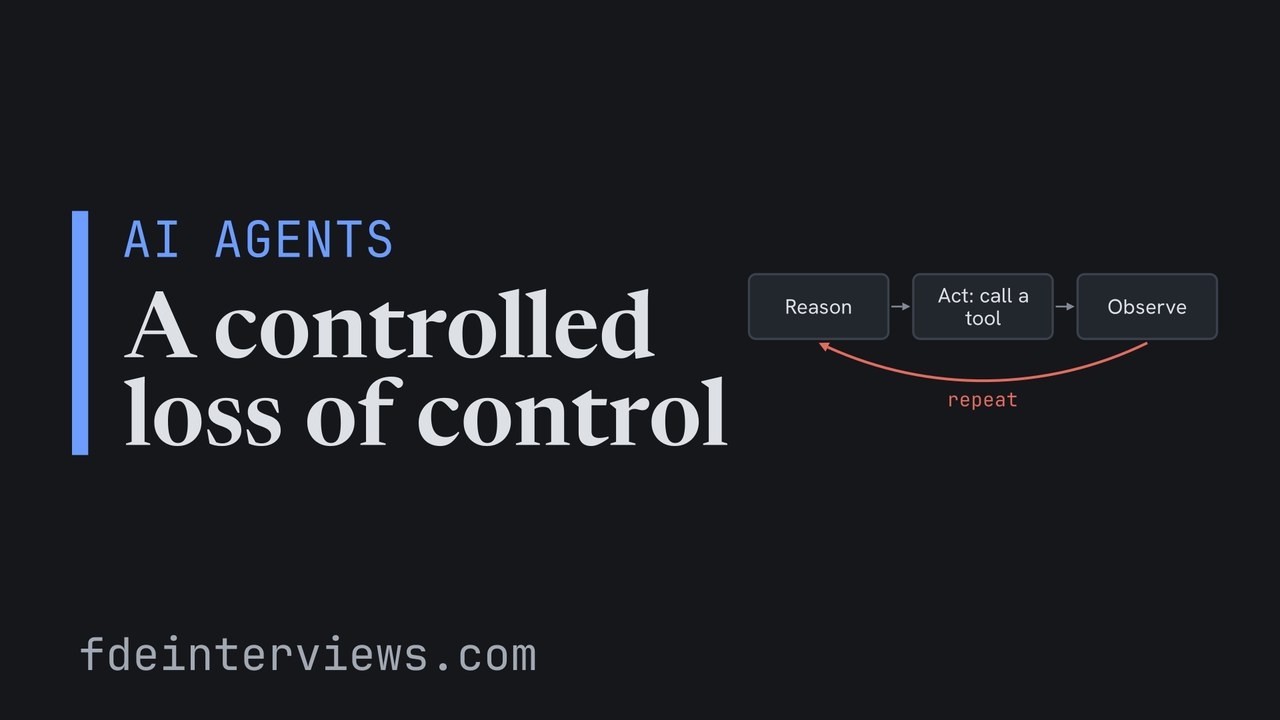 3:18
AI Agents and Tool Use
Watch the explainer 3:09
TF-IDF and BM25
Watch the explainer 3:54
Context Window Management for FDE Agents
Watch the explainer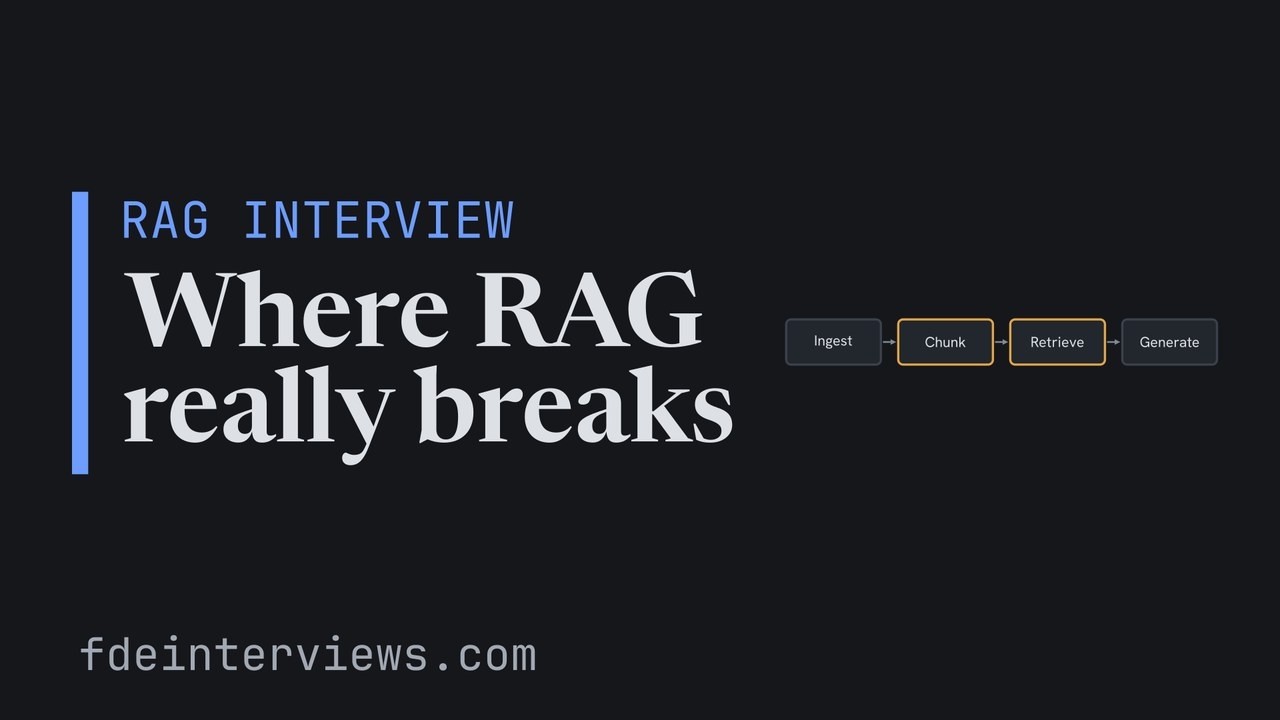 3:23
Walk me through a RAG pipeline: the spine, and where it actually breaks
Watch the explainer 3:33
Chunking documents for RAG: why chunk boundaries are a recall problem
Watch the explainer 3:28
When is an AI agent the wrong answer? The cost ladder and the three conditions
Watch the explainer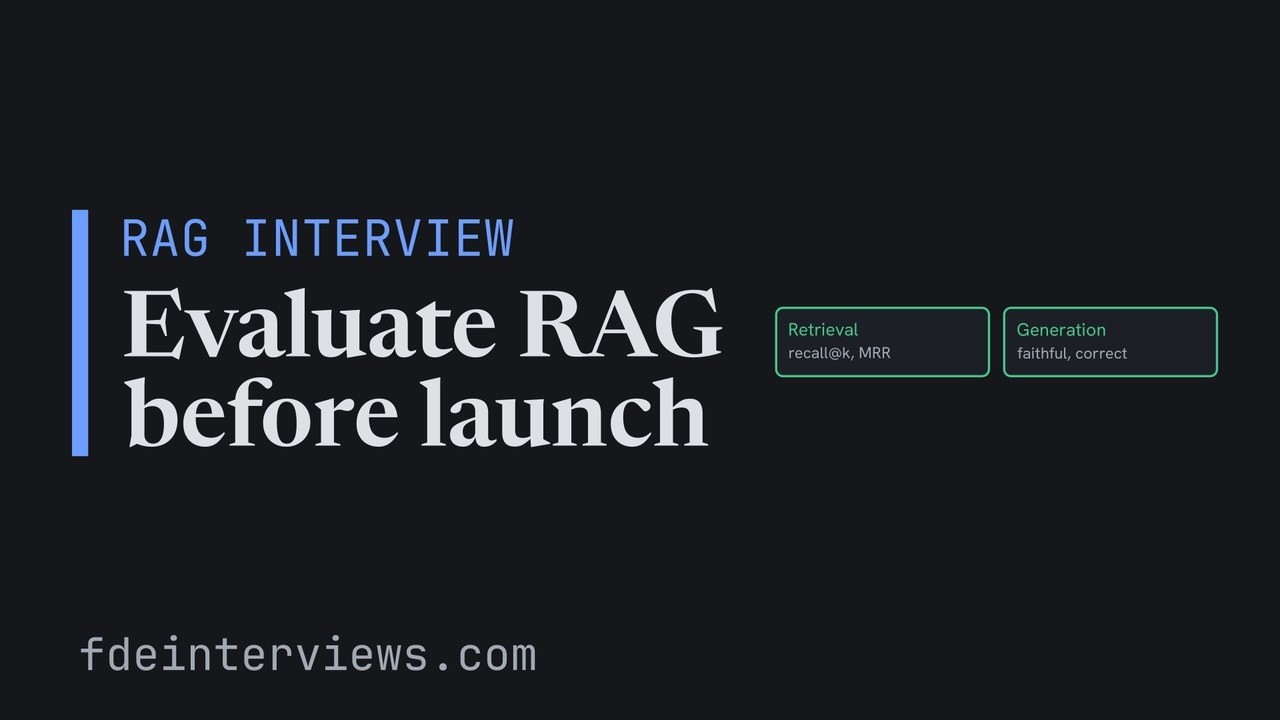 3:47
How to evaluate a RAG system before launch: golden set, split metrics, launch gate
Watch the explainer 3:35
Hybrid search design: BM25, vectors, RRF and a reranker, and what each stage rescues
Watch the explainer 3:24
A RAG pilot answers 60% correctly: the diagnostic tree that wins the question
Watch the explainer 3:59
Designing a customer-support agent's tools: reads, two-phase writes, and evals first
Watch the explainerEvaluation & ML Foundations
Explore this topic →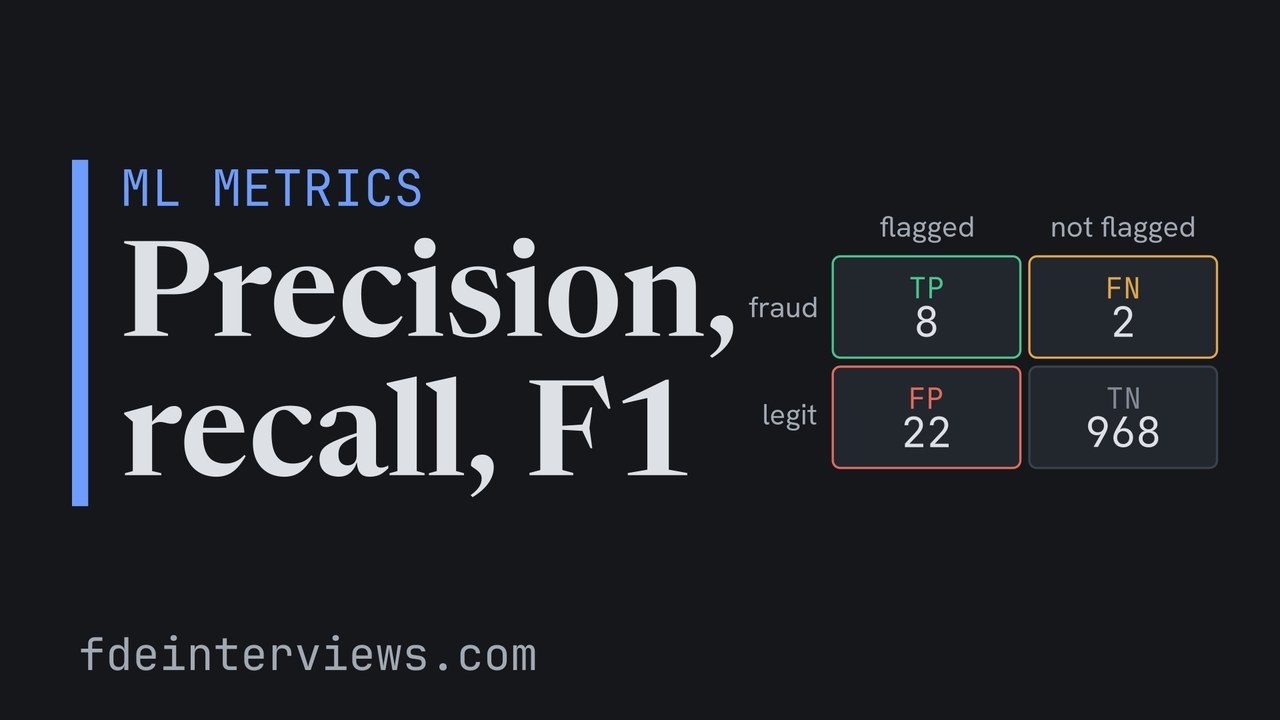 3:32
Precision, Recall and F1
Watch the explainer 2:34
Gradient Descent & Learning Rate
Watch the explainer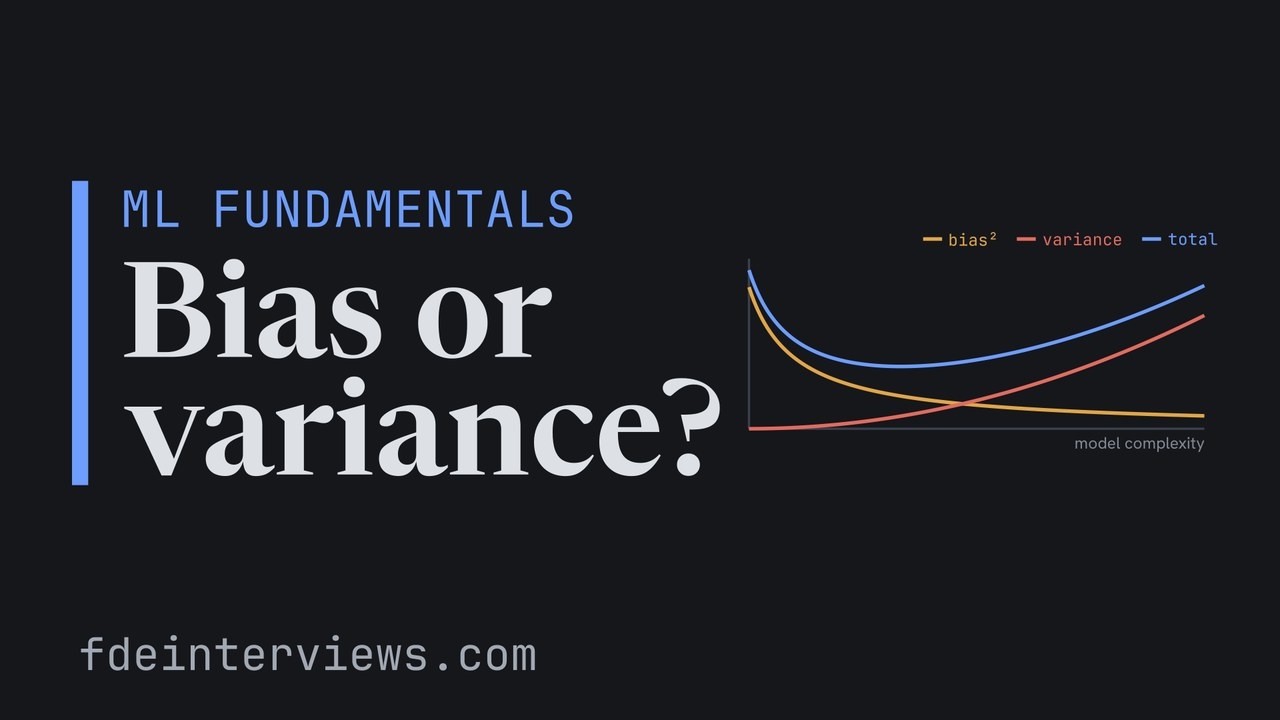 3:30
Bias-Variance Tradeoff
Watch the explainer 3:16
Overfitting and Regularization
Watch the explainer 3:36
Golden Datasets and Eval Sets
Watch the explainer 3:31
Loss Functions
Watch the explainer 3:11
Activation Functions
Watch the explainer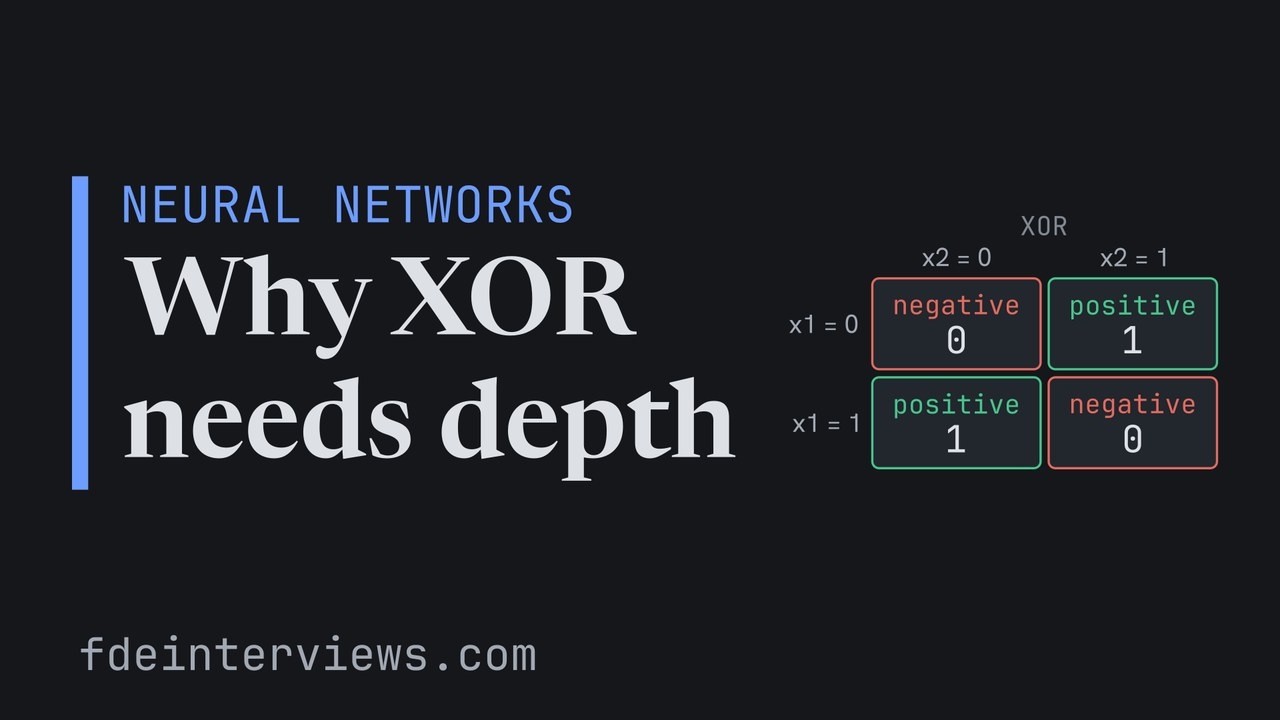 3:06
Neural Network Basics: Perceptron to MLP
Watch the explainer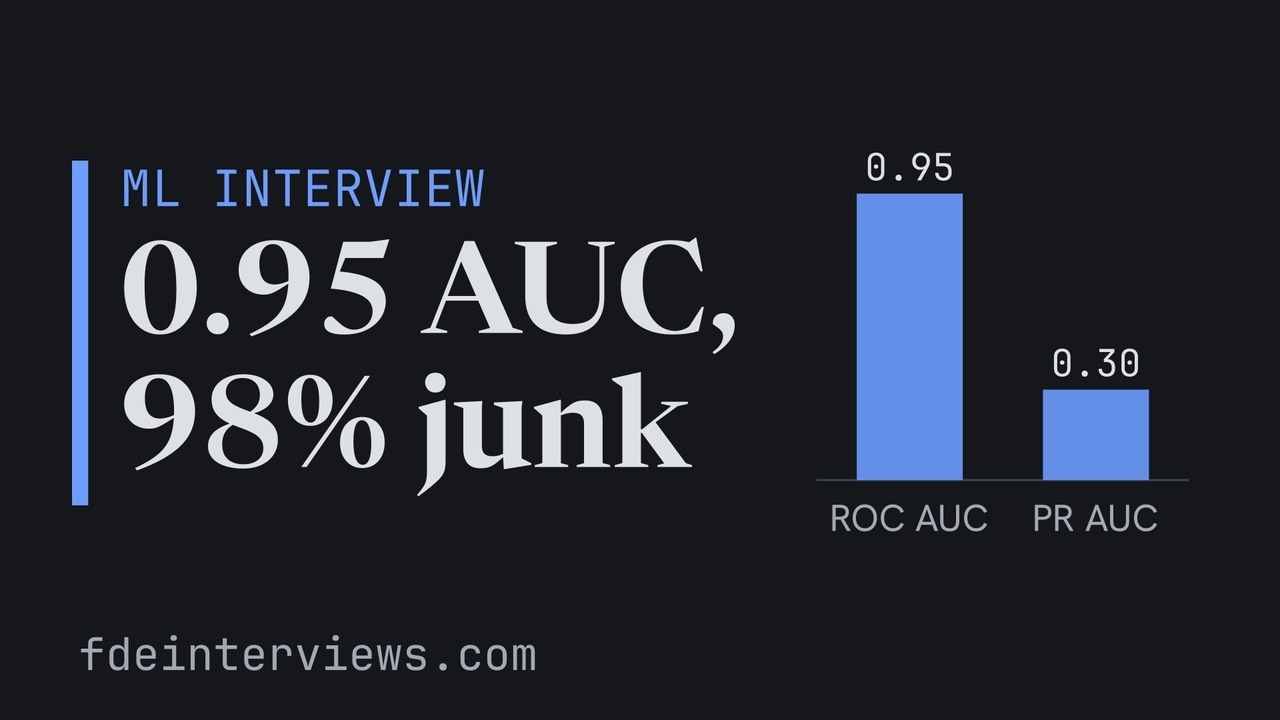 4:00
ROC AUC vs PR AUC: why a 0.95 AUC model can flood the review queue with junk
Watch the explainer 3:33
Class imbalance: 99.5% accuracy that catches nothing, and the full fix
Watch the explainer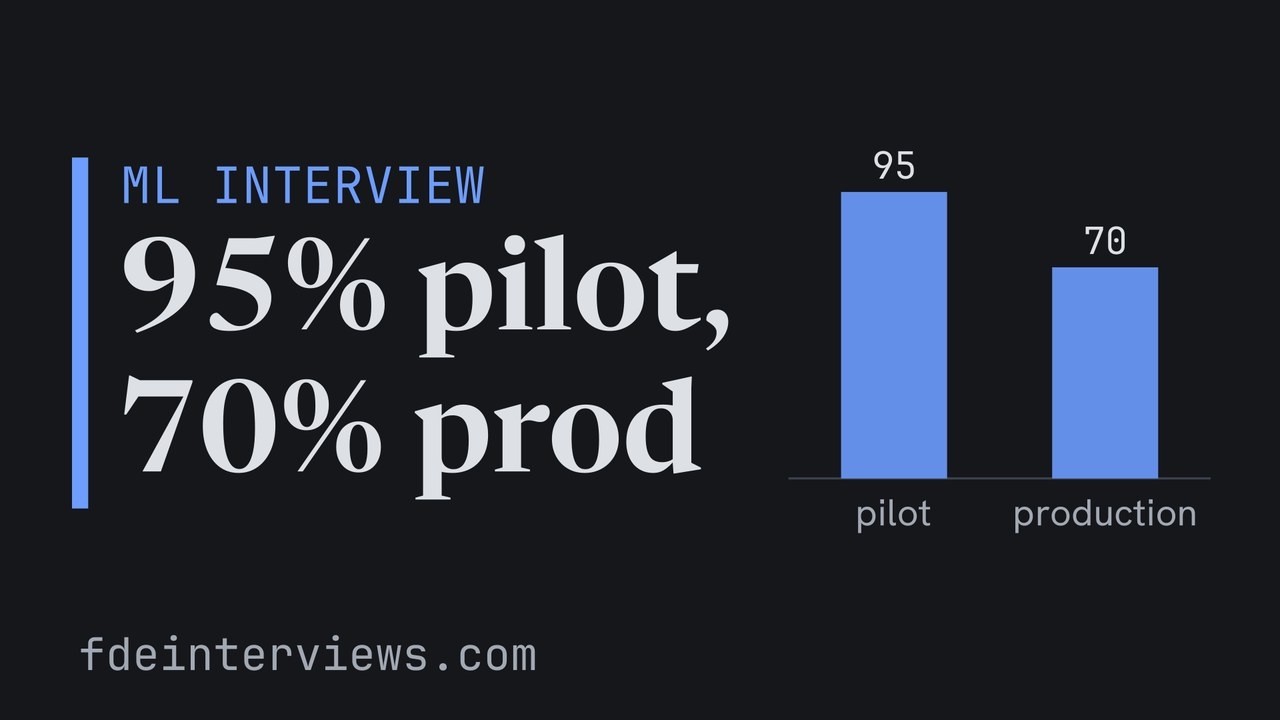 3:39
Your model scored 95% in the pilot and 70% in production: data leakage, diagnosed
Watch the explainer 3:39
K-fold cross-validation, and the two data shapes where it lies to you
Watch the explainer 3:42
"We want the model to be accurate": turning that into the metric you optimize
Watch the explainer 3:58
Tree ensembles vs linear models vs neural nets: choosing for tabular data
Watch the explainerSystem Design for AI in Production
Explore this topic → 2:48
From Proof-of-Concept to Production
Watch the explainer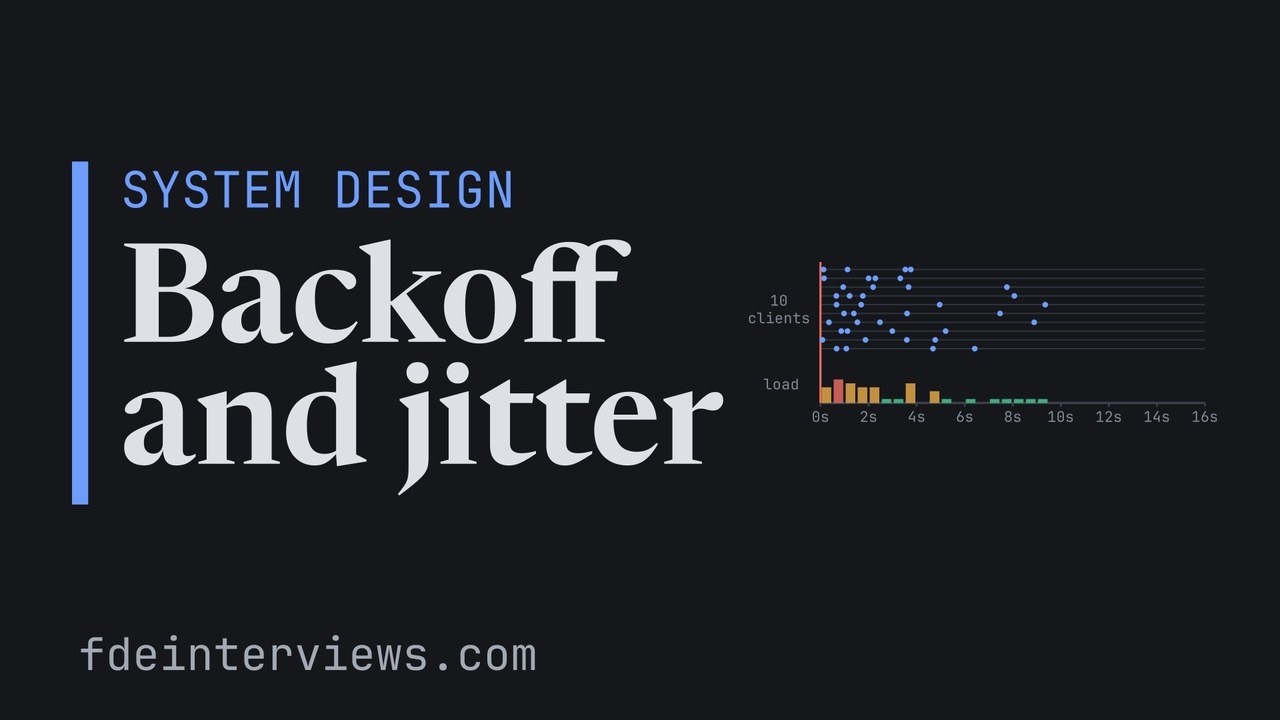 2:33
Retries, Exponential Backoff and Jitter
Watch the explainer 3:01
At-least-once vs exactly-once delivery: why duplicates are certain, and the fix
Watch the explainer 3:38
Rate limiting explained: fixed window, sliding window, token bucket, and when each breaks
Watch the explainer 3:19
p50, p95, p99 latency explained: why the tail hits far more than 1% of users
Watch the explainer 3:21
Dead-letter queues and poison messages: what happens after the message lands
Watch the explainer 3:55
Estimate the capacity and cost of an LLM app: tokens, peak QPS, and tokens per minute
Watch the explainer 3:22
A customer's app times out calling your API and you can't see their code: debug it
Watch the explainer 3:23
Why a queue consumer double-processes under load, and the race-free fix
Watch the explainerMLOps & Lifecycle
Explore this topic → 3:37
How CI/CD for ML models differs from traditional DevOps CI/CD
Watch the explainer 3:35
What MLflow is for, and its four components, with the detail that proves you've used it
Watch the explainer 3:57
Why use a model registry instead of just storing model artifacts in S3?
Watch the explainer 3:38
What problem a feature store solves: the online store vs the offline store
Watch the explainer 3:35
Shadow deployment vs A/B testing a model: different questions, run in sequence
Watch the explainerML Infrastructure & Serving
Explore this topic → 3:52
The CUDA execution model: how grids, blocks and warps map to SMs
Watch the explainer 3:56
The GPU memory hierarchy: registers, shared memory, L2, HBM, and the numbers that matter
Watch the explainer 3:20
Warp divergence: why mixed branches in a warp cost you, and which ones don't
Watch the explainer 3:47
Memory coalescing and shared-memory bank conflicts, and the one-character transpose fix
Watch the explainer 3:59
Memory-bound or compute-bound? The roofline model, with an H100's real numbers
Watch the explainer 3:58
Data vs tensor vs pipeline parallelism, and how they combine into 3D parallelism
Watch the explainer 3:30
Ring all-reduce: how it works, and deriving its communication cost
Watch the explainer 3:24
What ZeRO and FSDP actually shard, how much each stage saves, and where gradient checkpointing fits
Watch the explainerData & SQL Engineering
Explore this topic →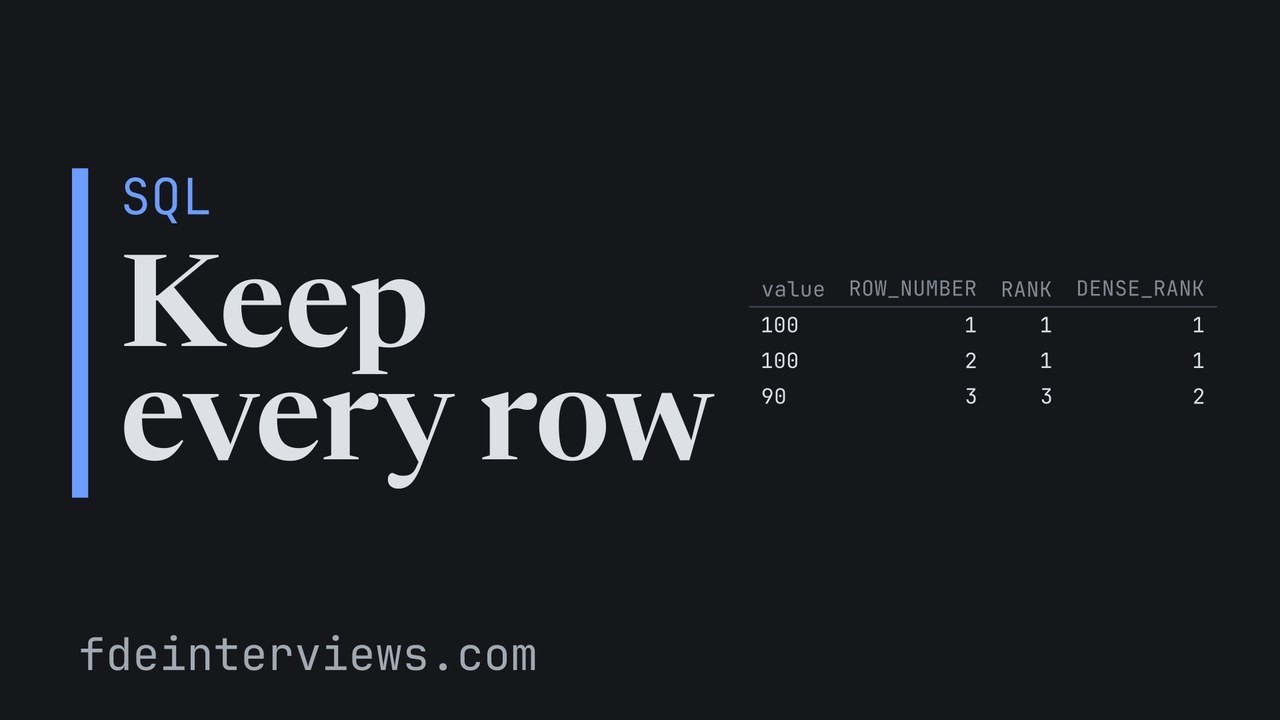 2:58
SQL Window Functions
Watch the explainer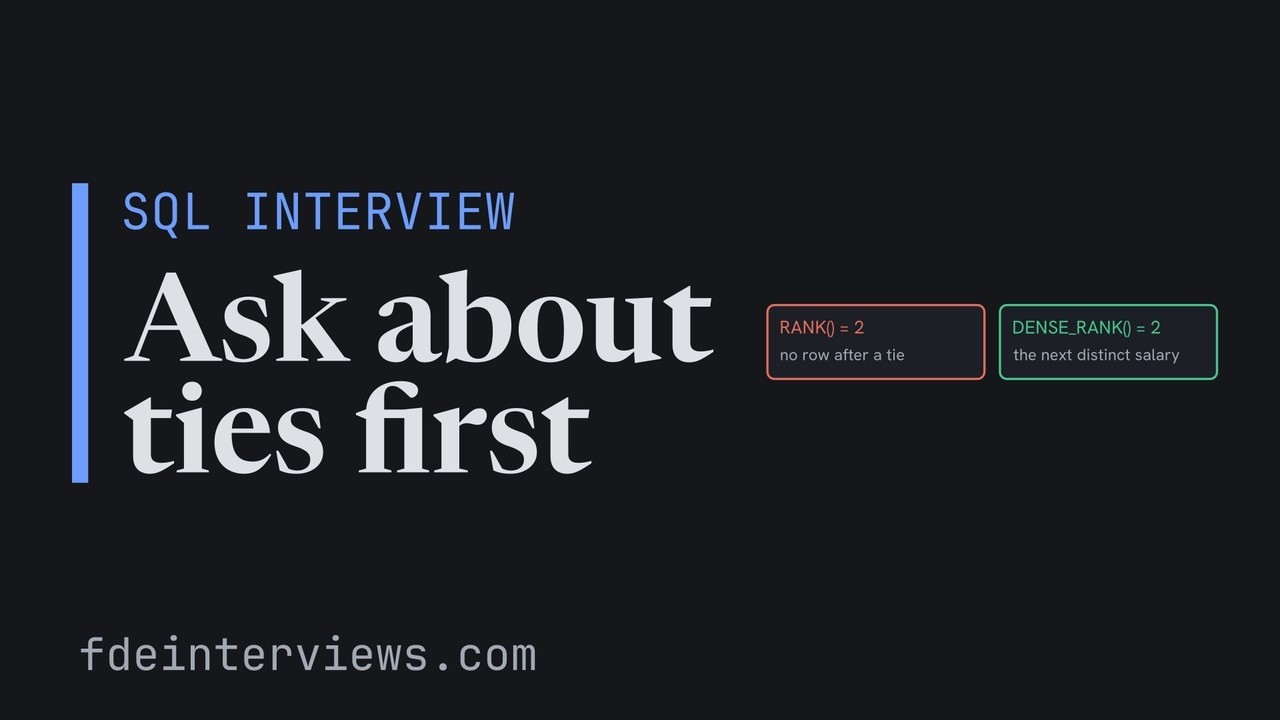 3:03
Second-highest salary per department in SQL: DENSE_RANK, and why RANK returns nothing
Watch the explainer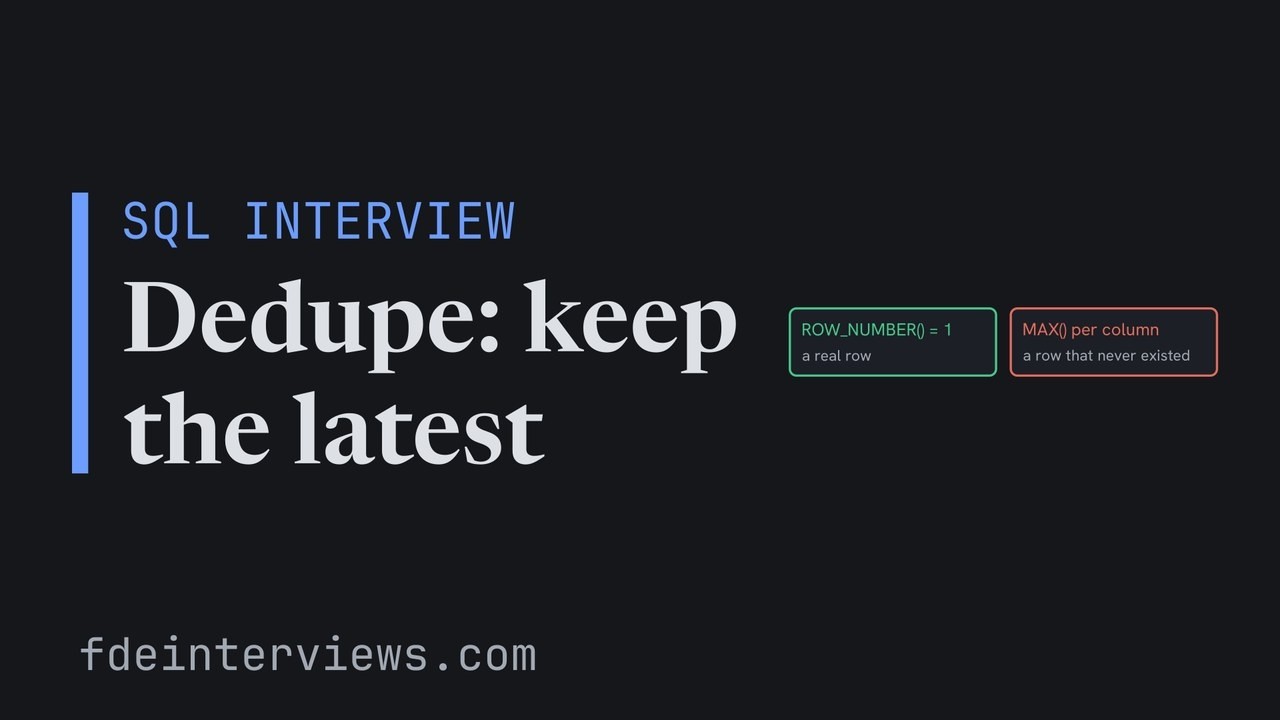 3:07
SQL: keep only the latest row per key, rerun-safe (and the MAX bug that invents rows)
Watch the explainer 2:59
Why your LEFT JOIN turned into an INNER JOIN: the WHERE clause NULL trap
Watch the explainer 3:21
Gaps and islands in SQL: find 3+ consecutive days with the date-minus-row_number trick
Watch the explainer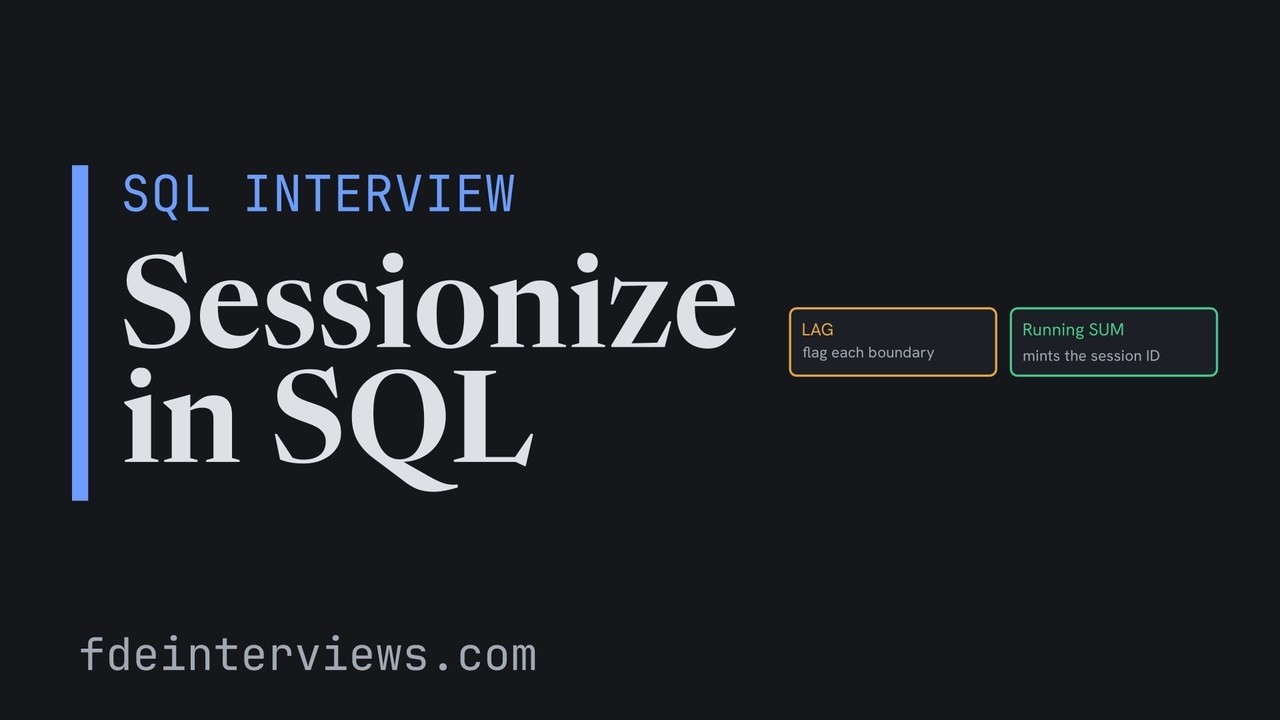 3:35
Sessionize events in SQL: LAG, a 30-minute gap, and a running SUM
Watch the explainer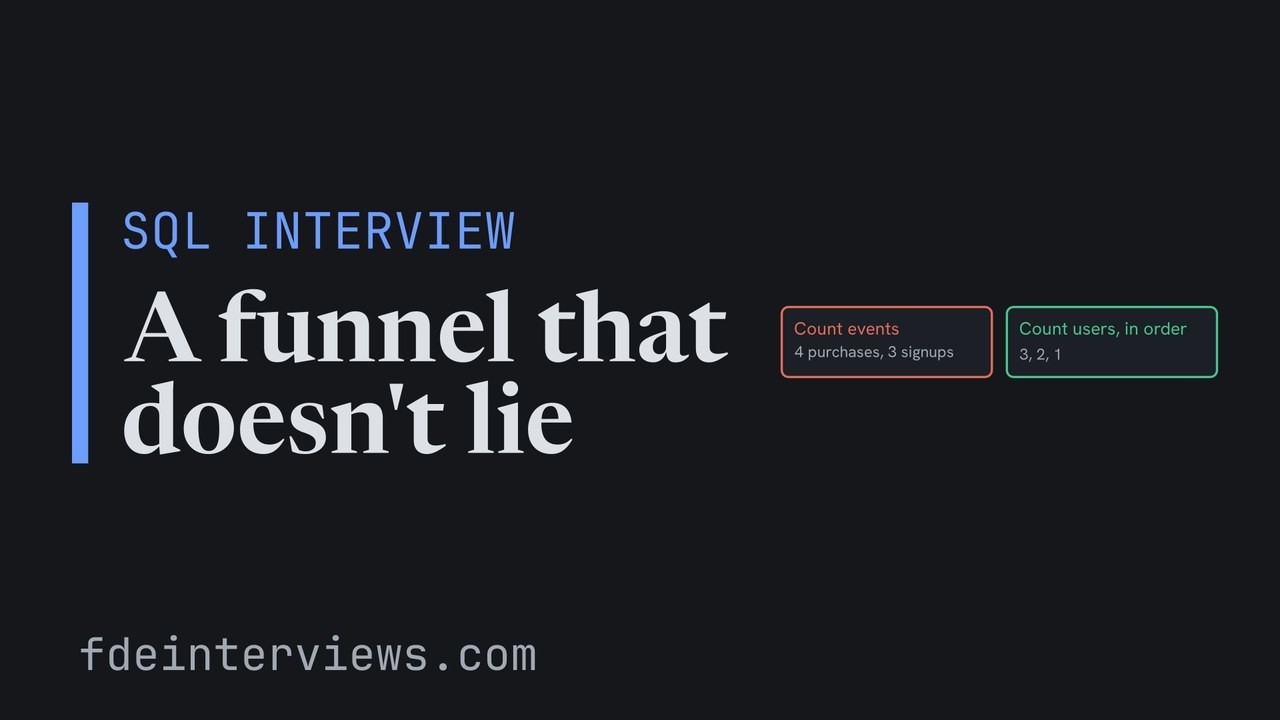 3:01
Funnel analysis in SQL by signup cohort: count users, enforce order, and the MIN trap
Watch the explainer 2:56
SQL join fan-out: why your revenue tripled after one join, and the 30-second check
Watch the explainerAI Security, Privacy & Governance
Explore this topic → 3:43
Direct vs indirect prompt injection: why the indirect one breaks enterprise LLM apps
Watch the explainer 3:13
Jailbreak vs prompt injection: whose policy is violated, and who has to fix it
Watch the explainer 3:10
Why system prompts leak, and what should never be in one
Watch the explainer 3:39
The OWASP LLM Top 10 for AI agents: which two risks to prioritize, and why
Watch the explainer 3:35
Excessive agency (OWASP LLM06): the controls that actually limit an AI agent
Watch the explainer 3:32
MCP tool poisoning: why tool descriptions are an attack surface, and how to defend them
Watch the explainerCoding & Engineering Craft
Explore this topic →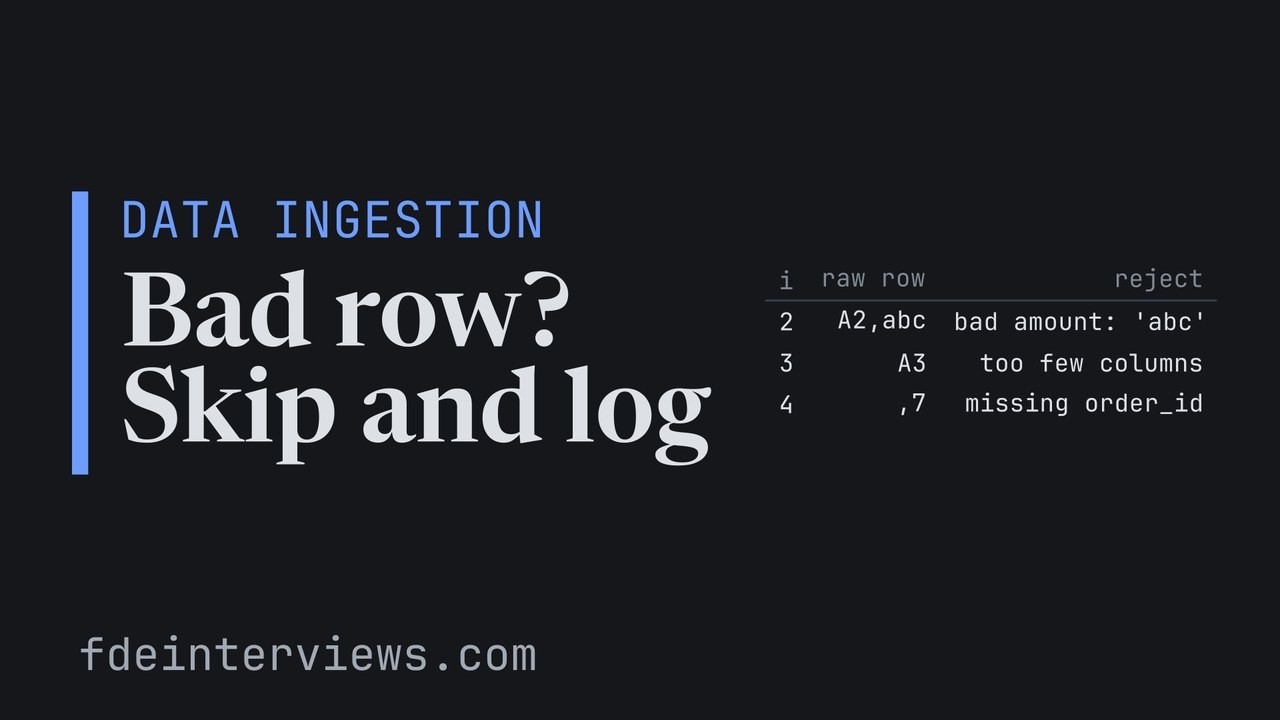 3:39
Parsing Messy, Real-World Data
Watch the explainer 3:22
Big-O That Actually Matters
Watch the explainer 3:16
Sliding Window and Two Pointers
Watch the explainer 2:50
Heaps and Top-K
Watch the explainer 3:03
Two Sum in one pass: the hashmap answer, the trace, and the duplicate trap
Watch the explainer 3:01
Group anagrams: the canonical-key idea interviewers are really testing
Watch the explainer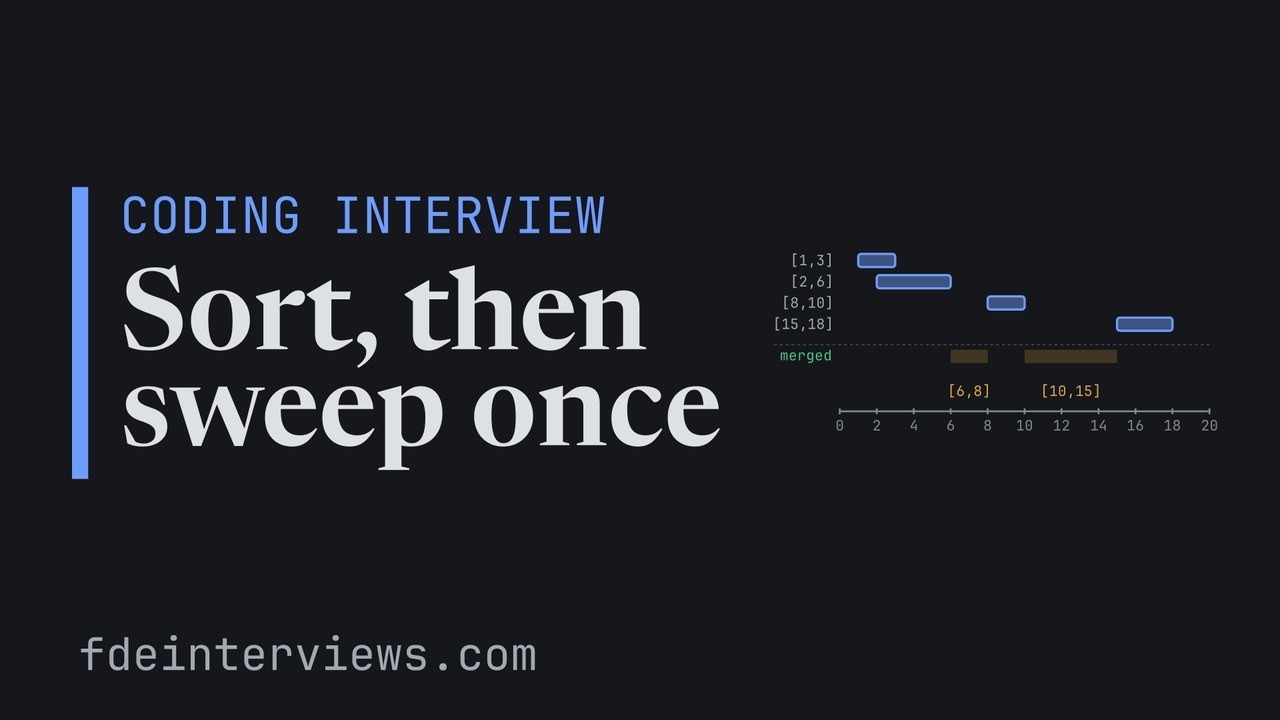 3:26
Merge overlapping intervals: sort, then sweep, and the two details interviewers wait for
Watch the explainer 3:35
Subarray sum equals K: why sliding window fails, and the prefix-sum hashmap
Watch the explainer 3:26
Three Sum: sort, two pointers, and the three duplicate skips interviewers grade
Watch the explainer 3:04
Design an LRU cache with O(1) get and put: OrderedDict, then from scratch
Watch the explainerThe Customer-Facing Craft
Explore this topic →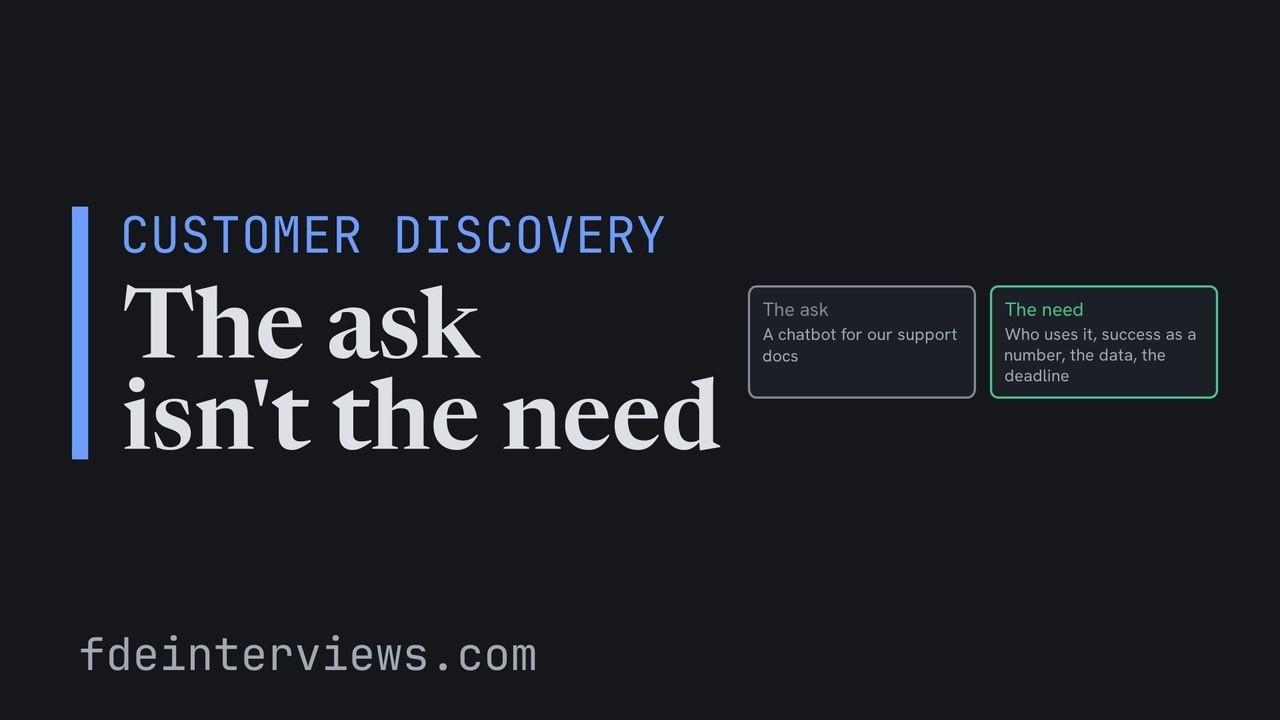 3:09
Requirements Discovery
Watch the explainer 3:15
Scoping Ambiguous Problems
Watch the explainer 3:29
Explaining Trade-offs to Non-Engineers
Watch the explainer 3:49
"Your most ambiguous project": how to answer the week-one follow-up
Watch the explainer 3:49
"A time you said no to a customer": the yes-shaped no, with a worked example
Watch the explainer 3:56
"A project that failed. Whose fault was it?" How to answer with honest attribution
Watch the explainer 3:44
Fermi estimate: LLM tokens per day for a Fortune-500 support org, worked through
Watch the explainer 3:58
"Turning a skeptic into a champion": steel-man first, then convert with behavior
Watch the explainerML System Design (Product)
Explore this topic → 3:57
Design the ranking model for a personalized feed: the ML system design interview
Watch the explainer 3:58
Design an evaluation framework for an ads-ranking system
Watch the explainer 3:46
Design a system to detect bots and inauthentic accounts in real time
Watch the explainer 3:57
Build a fraud-detection model for payments: threshold on dollars, not probability
Watch the explainerFoundations of Forward Deployed Engineering
Explore this topic →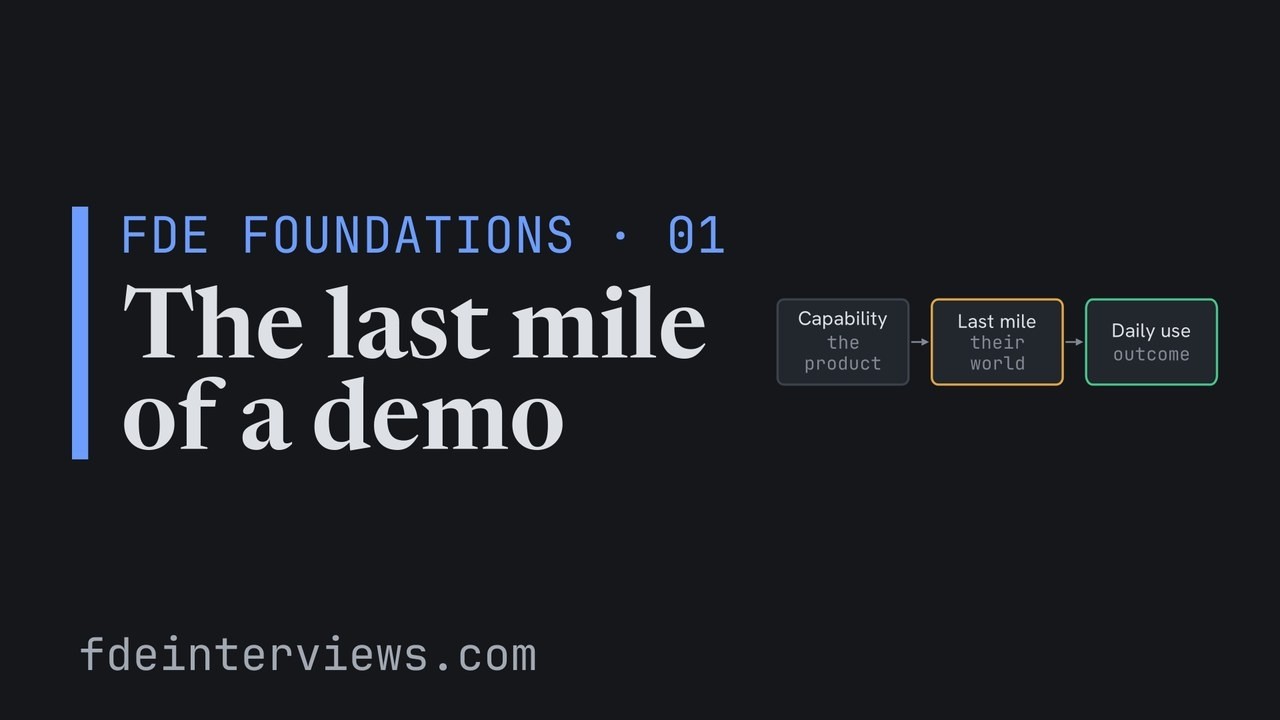 9:27
FDE Foundations 01 · The last mile: connect a capability to a real customer workflow
Watch the explainer 3:26
The last mile: what a forward deployed engineer actually does
Watch the explainer 10:45
FDE Foundations 02 · Roles by ownership: compare FDE, solutions, services and product work
Watch the explainer 3:40
FDE vs solutions engineer vs professional services: compare the work, not the title
Watch the explainer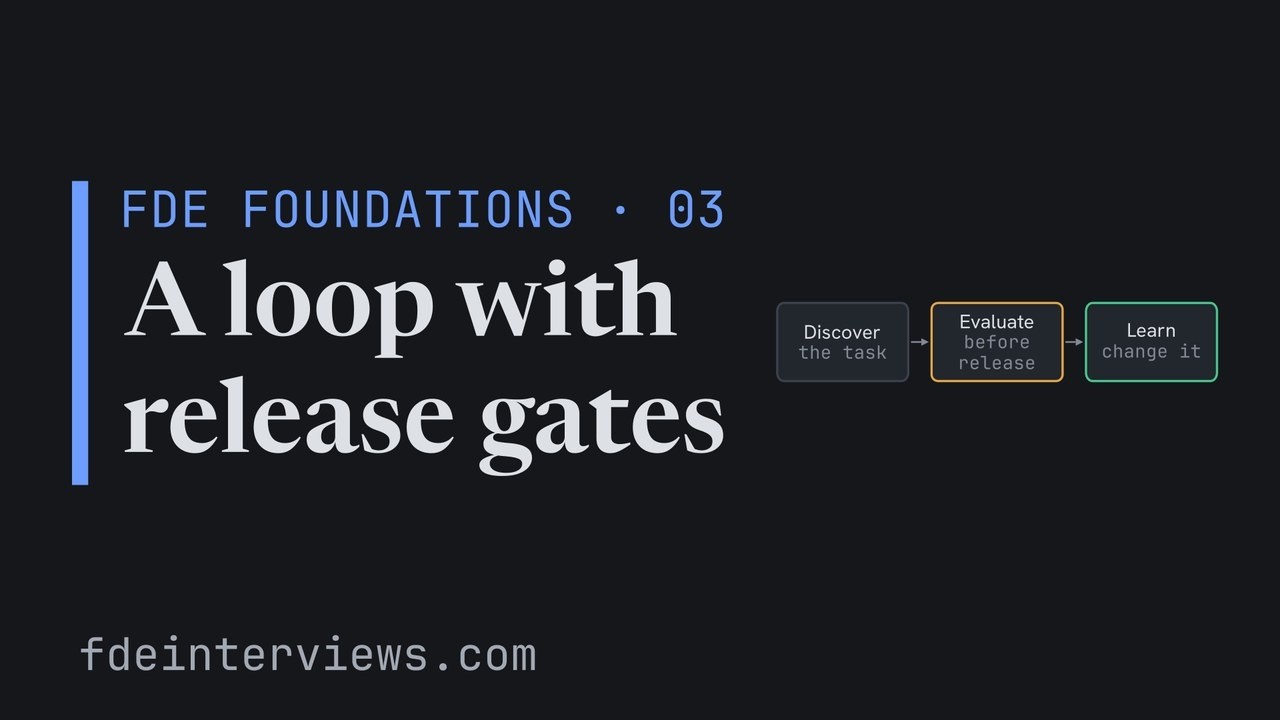 10:34
FDE Foundations 03 · The engagement loop: learn as you go, with explicit release gates
Watch the explainer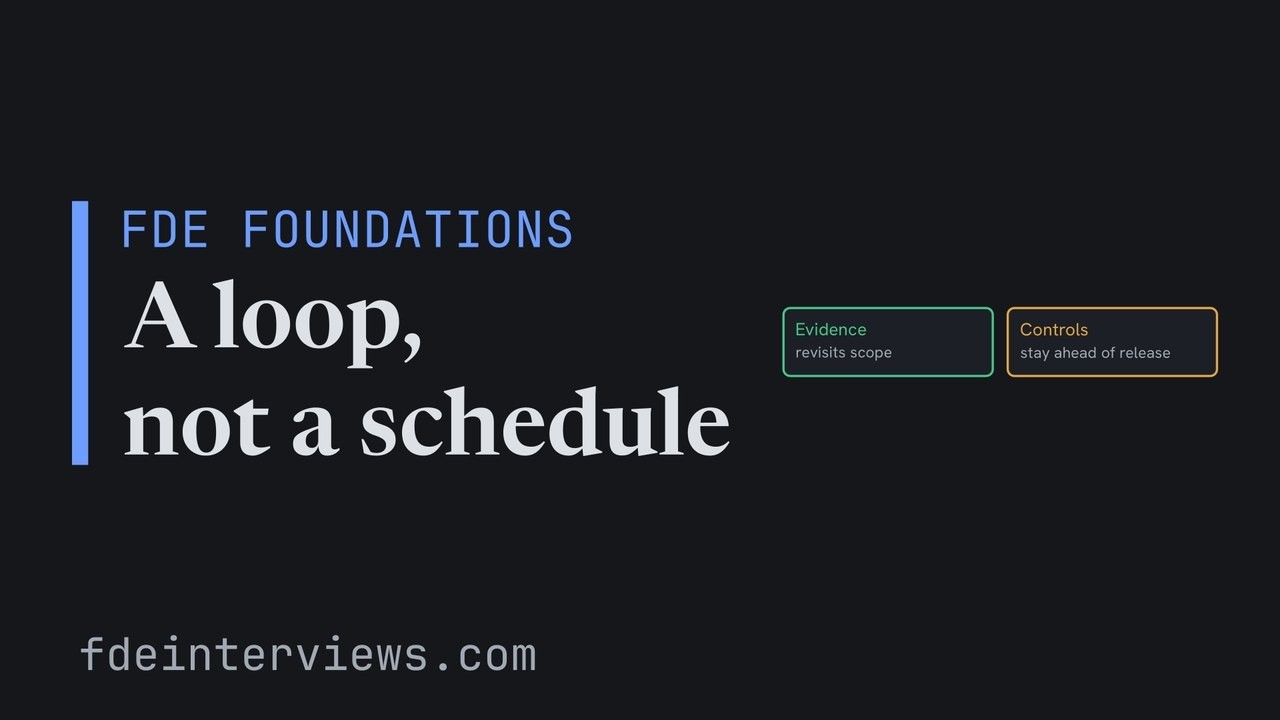 3:37
The FDE engagement loop: discover, scope, evaluate, ship, integrate, observe, learn, productize
Watch the explainer 11:10
FDE Foundations 04 · The stated problem: test a customer's request against the real work
Watch the explainer 3:37
The stated problem is not always the problem: discovery for forward deployed engineers
Watch the explainer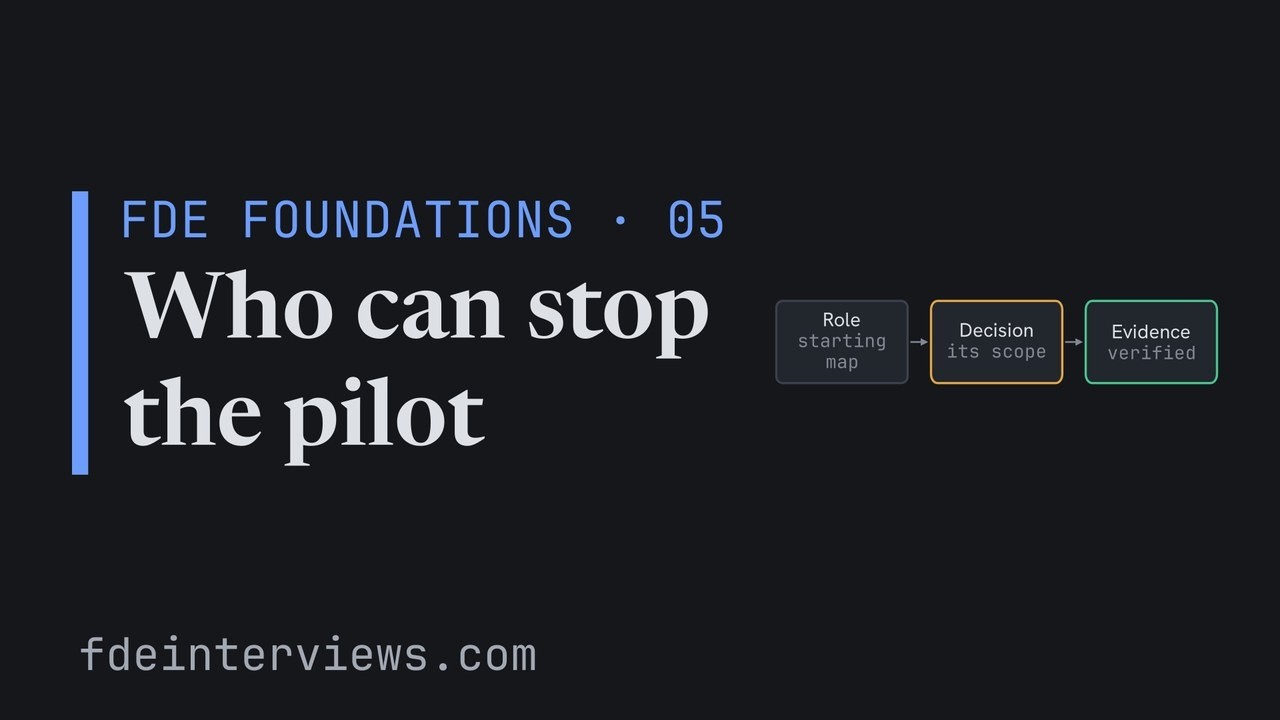 10:13
FDE Foundations 05 · The people who can stop you: map decisions, owners and prerequisites
Watch the explainer 3:25
The people who can stop your deployment: sponsors, champions, operators and reviewers
Watch the explainer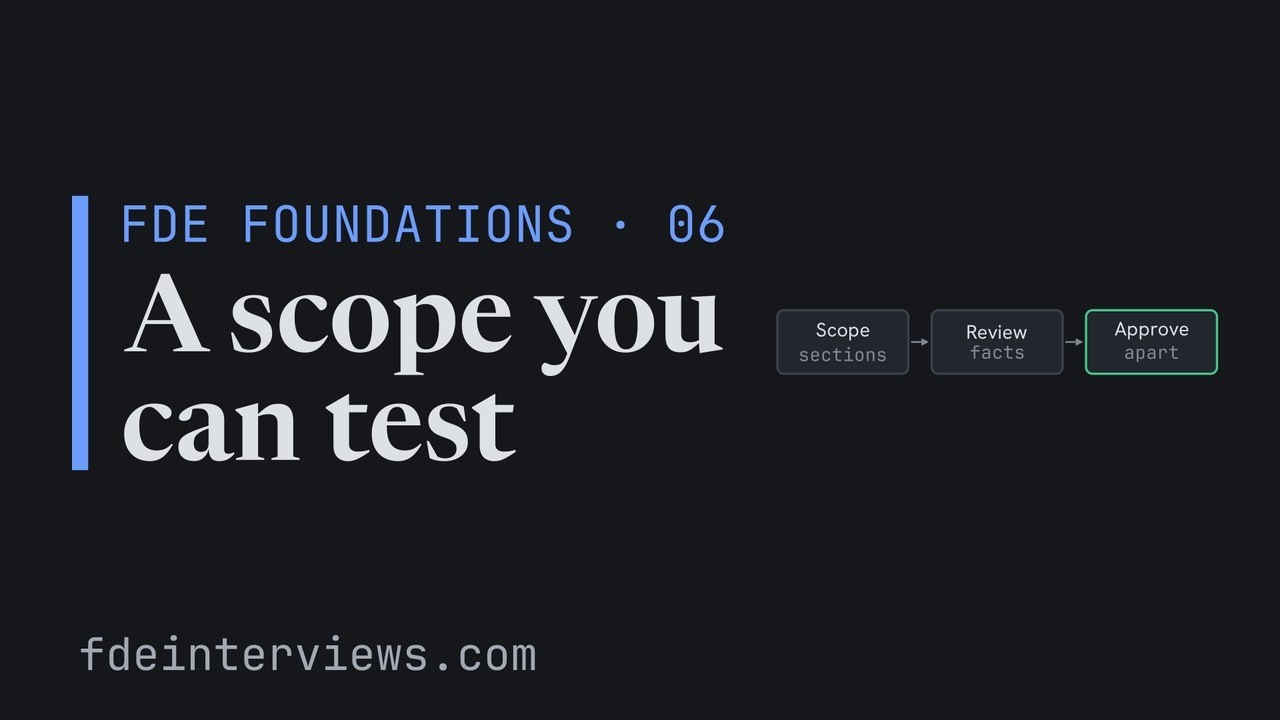 12:08
FDE Foundations 06 · The scoping document: a scope you can test, approve and change
Watch the explainer 3:43
The pilot scoping document: six sections that keep the gaps visible
Watch the explainer 10:45
FDE Foundations 07 · Orienting in someone else's system: build an evidence map
Watch the explainer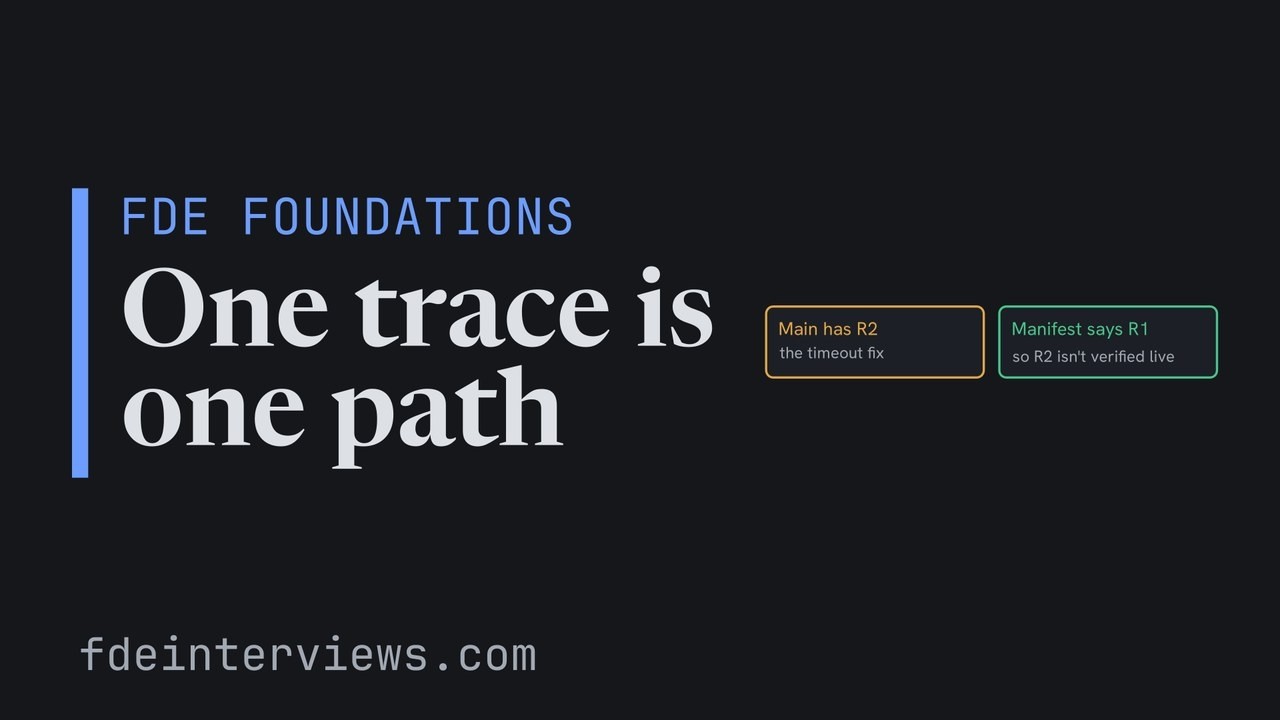 3:44
Reading an unfamiliar system: follow one record, then verify what runs
Watch the explainer 10:49
FDE Foundations 08 · Boundaries before components: ownership, trust, network and meaning
Watch the explainer 3:57
Boundaries before components: ownership, meaning, trust and network
Watch the explainer 11:16
FDE Foundations 09 · Three failure modes: test replay, slow dependencies and changed data
Watch the explainer 3:32
Three failure modes the demo misses: repeats, slow dependencies, changed data
Watch the explainer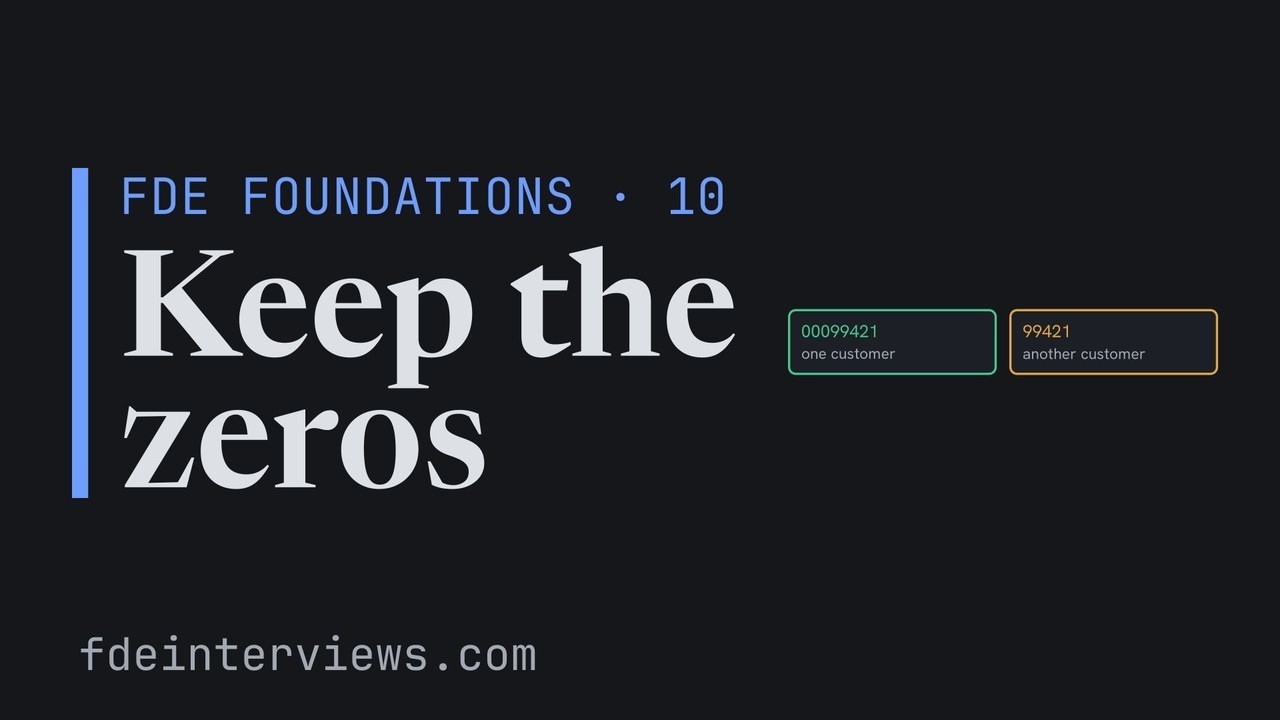 10:51
FDE Foundations 10 · The seam: translate source data without losing its meaning
Watch the explainer 3:43
The seam: write the adapter contract before the conversion
Watch the explainer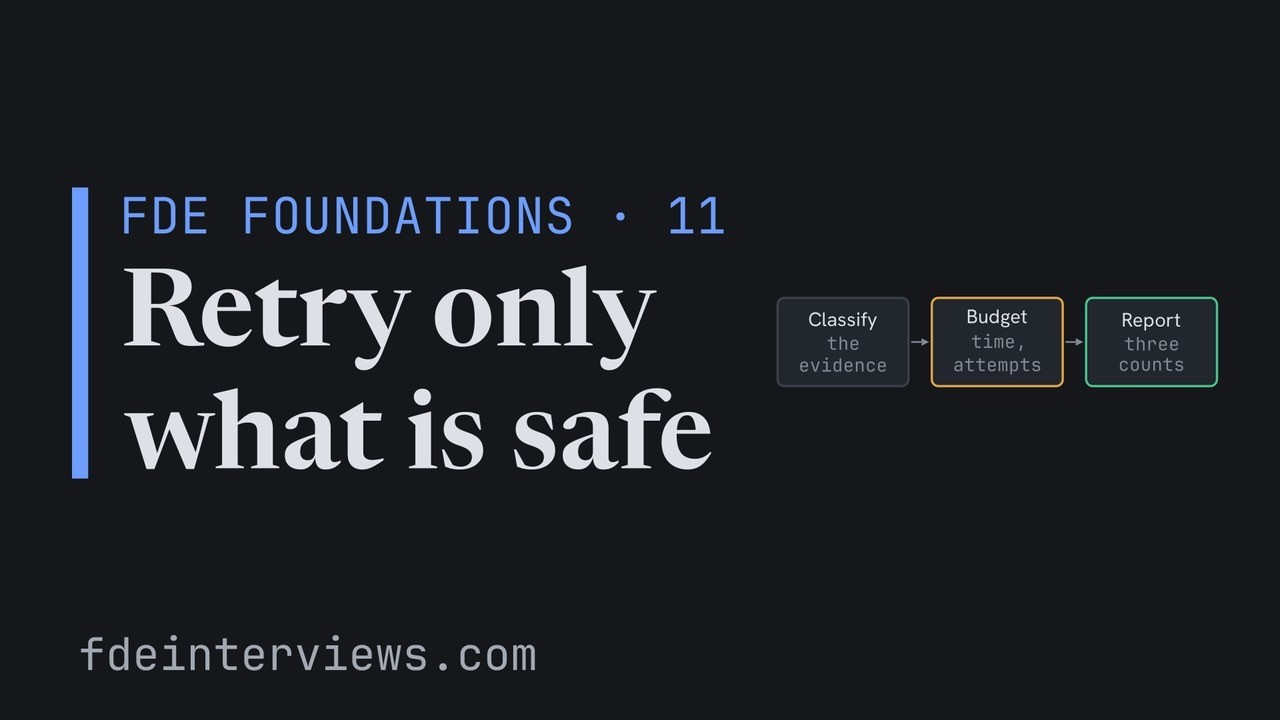 11:12
FDE Foundations 11 · Failing at 3 a.m.: retries from outcome evidence and a time budget
Watch the explainer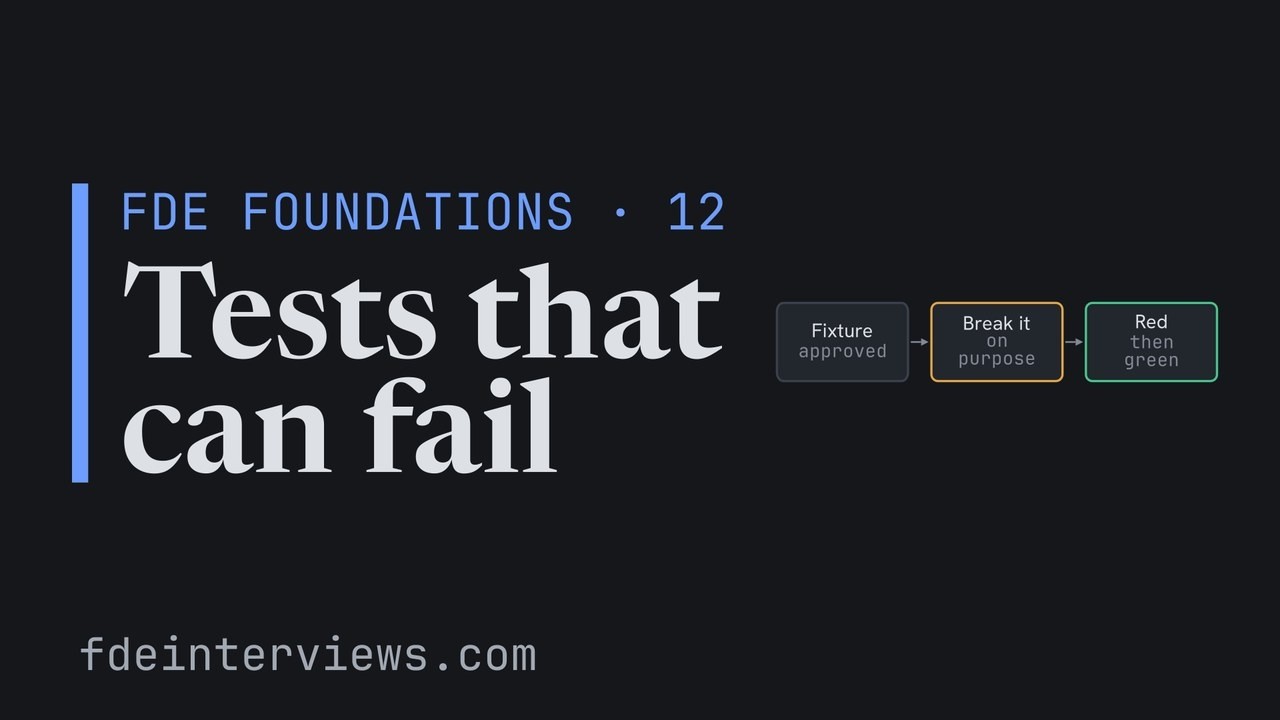 11:01
FDE Foundations 12 · Tests you can leave behind: catch regressions, state their limits
Watch the explainer 10:54
FDE Foundations 13 · The cleaning is the project: profile data into a scoped plan
Watch the explainer 10:32
FDE Foundations 14 · Safe to run again: replays that never overwrite newer facts
Watch the explainer 9:55
FDE Foundations 15 · Integrating the undocumented: investigate with bounded evidence
Watch the explainer 10:18
FDE Foundations 16 · One thing, three systems: resolve identities without hiding the unmatched
Watch the explainer 11:36
FDE Foundations 17 · Tables an analyst can use: declare the grain, prove totals survive joins
Watch the explainer 11:00
FDE Foundations 18 · When the business changes its mind: valid history and what you knew
Watch the explainer 10:30
FDE Foundations 19 · One question: give a proof of concept a decision and an evidence standard
Watch the explainer 10:02
FDE Foundations 20 · Fake it honestly: prototype shortcuts that don't change the claim
Watch the explainer 10:32
FDE Foundations 21 · Where they can see it: a bounded trial in users' hands
Watch the explainer 10:29
FDE Foundations 22 · Retrieval is what fails: trace the evidence before changing the prompt
Watch the explainer 11:05
FDE Foundations 23 · Write the eval first: labeled cases, abstentions and honest denominators
Watch the explainer 10:56
FDE Foundations 24 · Design for being wrong: abstention, review queues and honest limits
Watch the explainer 9:44
FDE Foundations 25 · Config and secrets: validate before serving, test credential rotation
Watch the explainer 10:34
FDE Foundations 26 · The three signals: connect logs, metrics and traces to outcomes
Watch the explainer 11:17
FDE Foundations 27 · A service level you can defend: denominators, error budgets, policy
Watch the explainer 10:57
FDE Foundations 28 · Write for one paragraph: lead with the decision, keep the evidence
Watch the explainer 10:33
FDE Foundations 29 · A demo is a narrative: visible evidence, honest limits, one decision
Watch the explainer 11:44
FDE Foundations 30 · Handing over: evidence, rehearsal and accepted ownership
Watch the explainerThe FDE Engagement
Explore this topic → 9:50
FDE Engagement 01 · The engineer in the sales call: commit only to what you can deliver
Watch the explainer 3:42
The engineer in the sales call: establish what you can actually deliver
Watch the explainer 11:48
FDE Engagement 02 · Find the deal killer: test what can invalidate a pilot before building
Watch the explainer 3:54
Find the deal killer: test the constraints that can sink a pilot before you build
Watch the explainer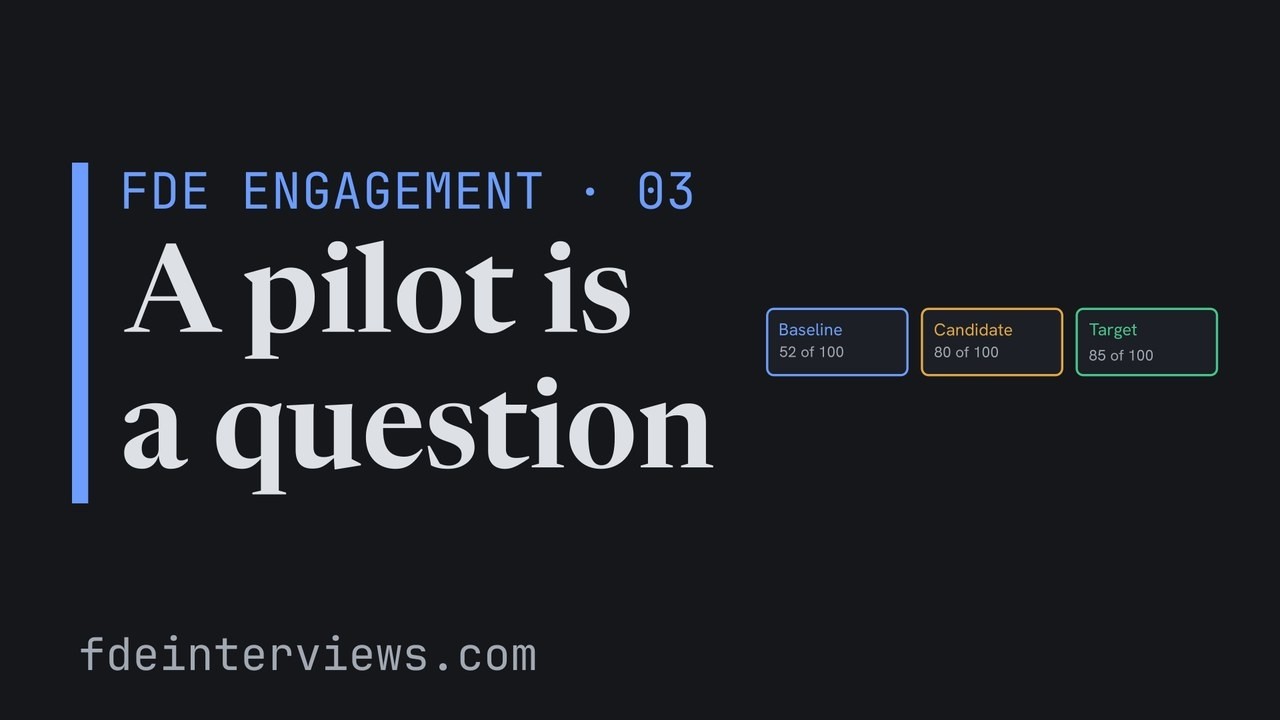 12:24
FDE Engagement 03 · The pilot proposal: write it around a decision you can actually test
Watch the explainer 11:30
FDE Engagement 04 · The system nobody owns: choose an integration path you can operate
Watch the explainer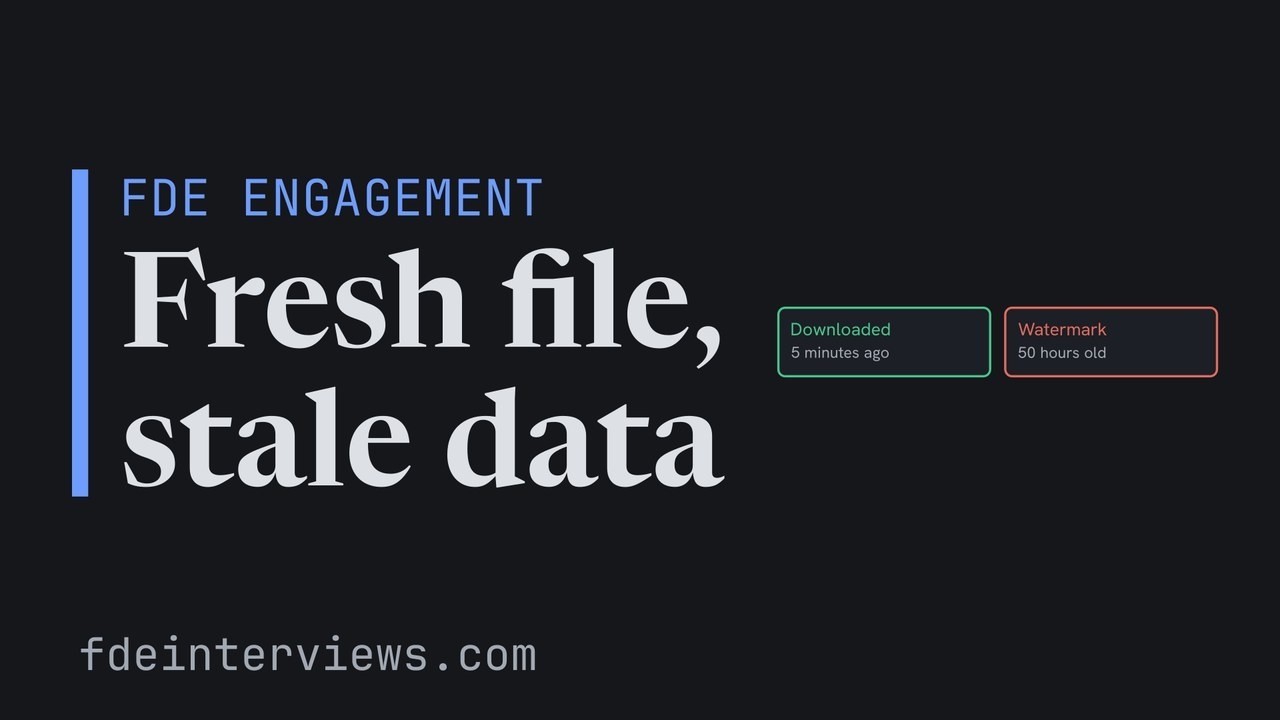 3:37
Integrating the system nobody owns: file drops, APIs, replicas and change feeds
Watch the explainer 12:50
FDE Engagement 05 · Proving who you are: enforce the caller's permissions at every boundary
Watch the explainer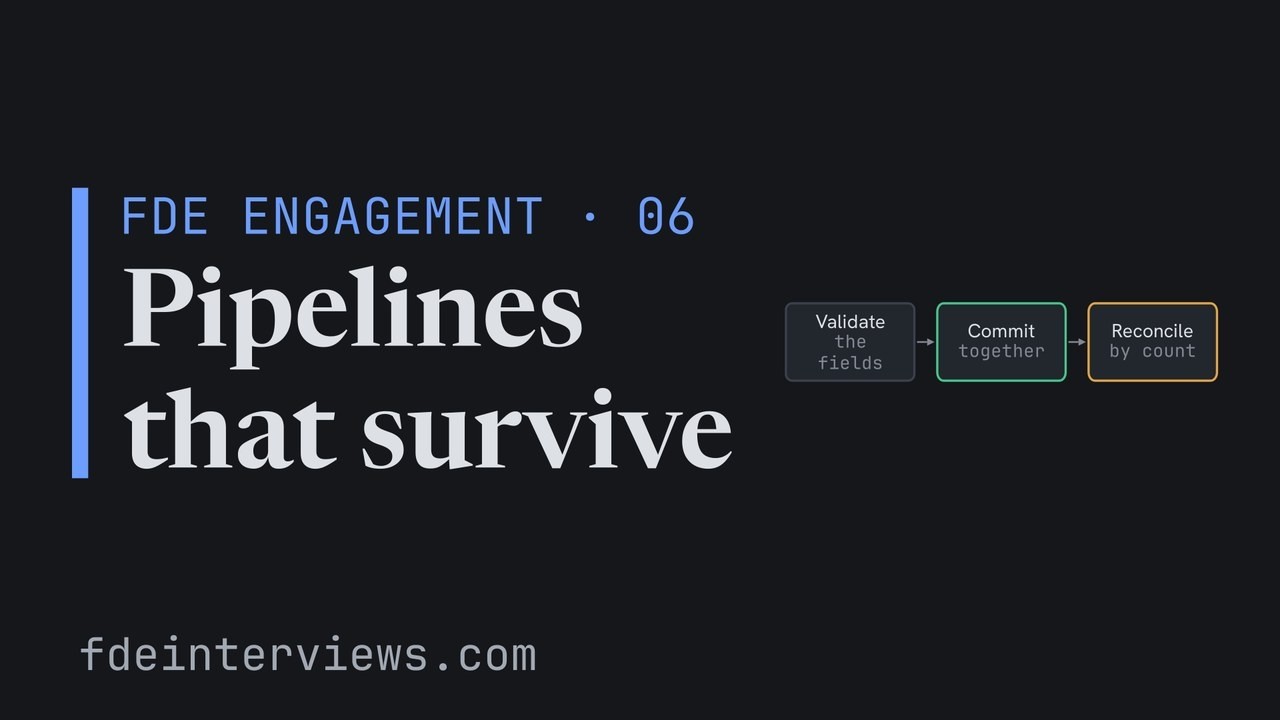 10:41
FDE Engagement 06 · Pipelines that survive: replay, quarantine and reconciliation
Watch the explainer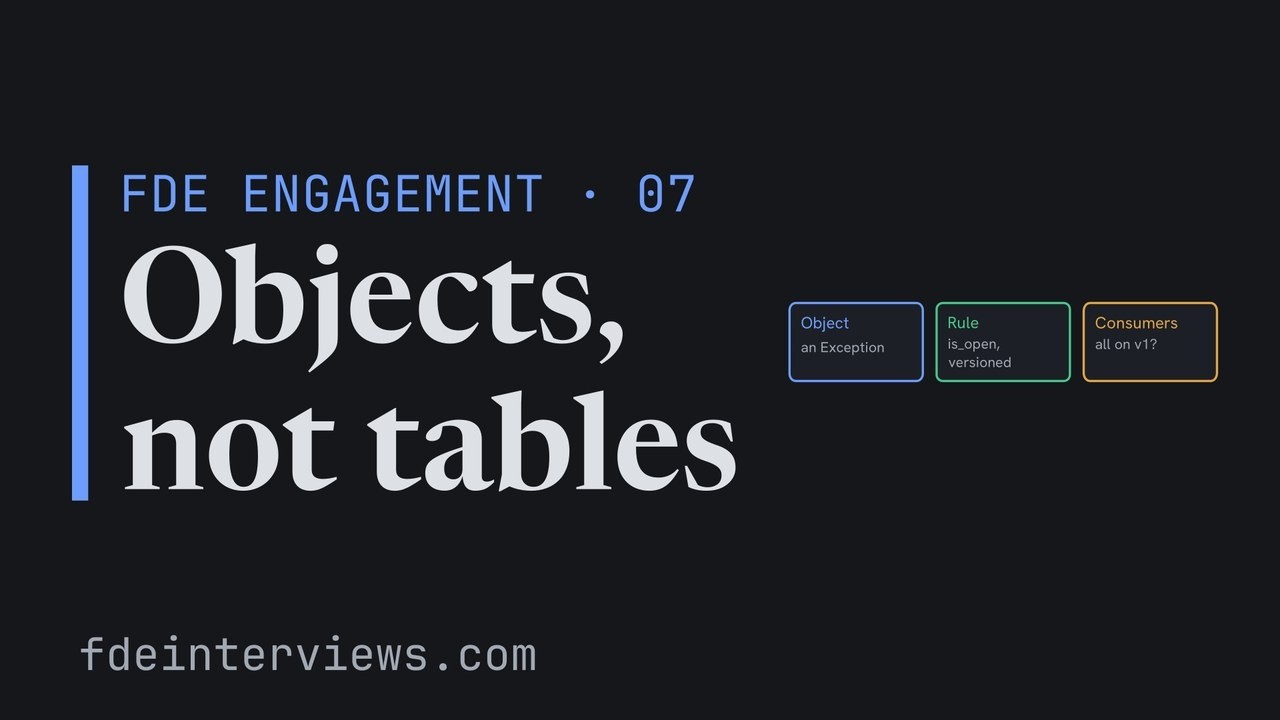 8:56
FDE Engagement 07 · Objects, not tables: give business definitions an executable home
Watch the explainer 8:47
FDE Engagement 08 · The hard part is the links: evidence, uncertainty and history in SQL
Watch the explainer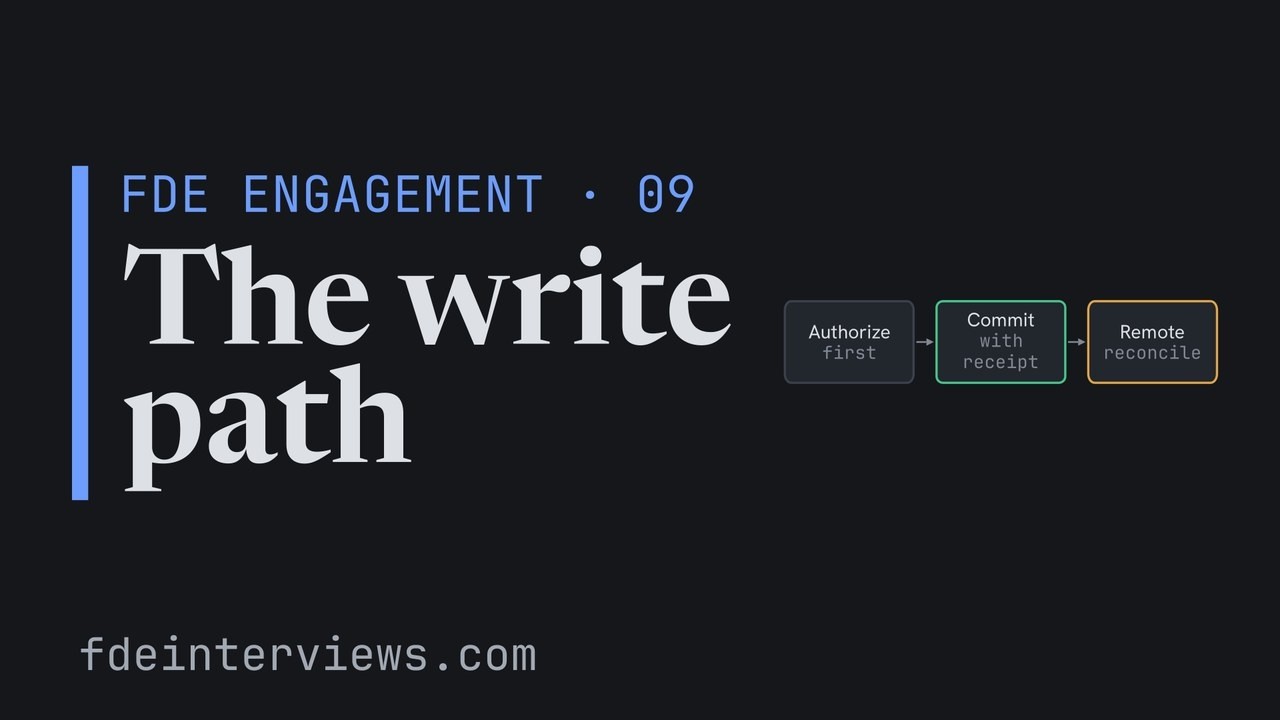 9:27
FDE Engagement 09 · Actions are the write path: authorize, retry and recover safely
Watch the explainer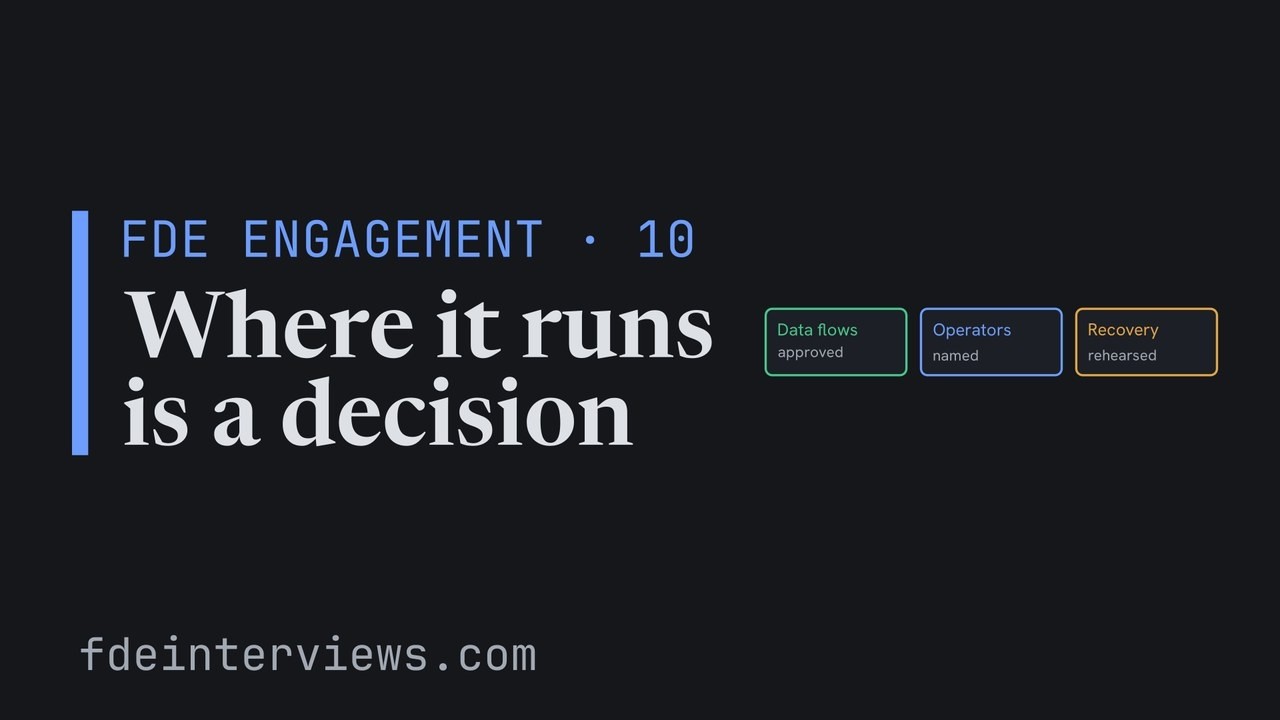 8:38
FDE Engagement 10 · Where it runs is a decision: a deployment you can actually operate
Watch the explainer 10:19
FDE Engagement 11 · Reproducible or it didn't happen: recreate the release, recover the state
Watch the explainer 10:04
FDE Engagement 12 · Seeing inside a box you can't open: diagnostics without your login
Watch the explainer 8:53
FDE Engagement 13 · The review is a conversation: a security packet that supports a decision
Watch the explainer 9:37
FDE Engagement 14 · The findings you can predict: follow data copies through deletion
Watch the explainer 9:53
FDE Engagement 15 · What they will ask about the model: data paths and enforced tools
Watch the explainer 11:25
FDE Engagement 16 · The eval harness comes first: an evaluation that can block a release
Watch the explainer 12:24
FDE Engagement 17 · The budget decides the architecture: cost per unit of the customer's work
Watch the explainer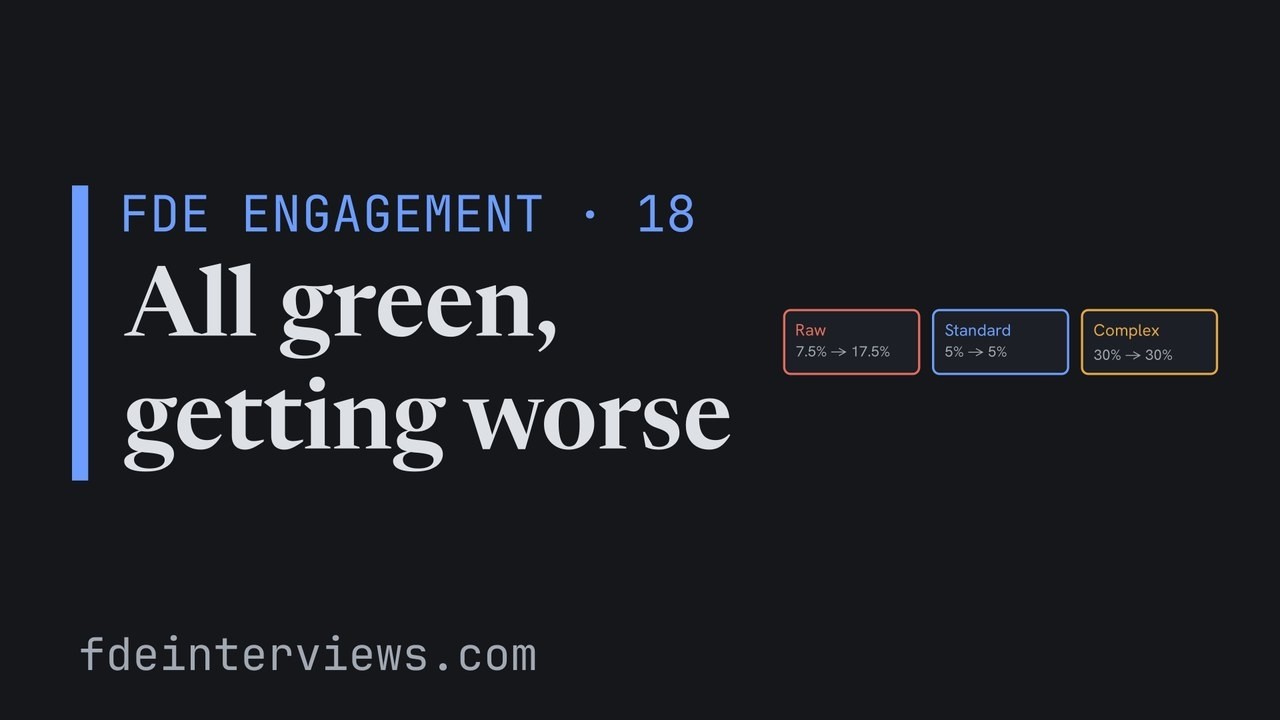 11:26
FDE Engagement 18 · Nothing alerts when quality drops: read overrides, mix and coverage
Watch the explainer 12:08
FDE Engagement 19 · Rule, model or prompt: write the rule first, then compare on cost
Watch the explainer 11:35
FDE Engagement 20 · The training set is the project: leakage, availability time, splits
Watch the explainer 10:12
FDE Engagement 21 · It decays and nothing errors: investigate drift before you retrain
Watch the explainer 9:12
FDE Engagement 22 · Authority without blast radius: bound agent actions and shared limits
Watch the explainer 9:37
FDE Engagement 23 · What a half-finished run leaves behind: recover agent runs without guessing
Watch the explainer 9:52
FDE Engagement 24 · You promote an agent, you don't deploy it: evidence gates for agent autonomy
Watch the explainer 9:44
FDE Engagement 25 · The number they will quote back: baseline, time, capacity and cash
Watch the explainer 11:25
FDE Engagement 26 · Attribution without a control group: improvement is not causation
Watch the explainer 12:21
FDE Engagement 27 · The review meeting: write the memo around a decision the evidence supports
Watch the explainer 9:38
FDE Engagement 28 · The champion who leaves: make the engagement survive a change of sponsor
Watch the explainer 10:00
FDE Engagement 29 · Saying no without losing the room: evidence, choices and boundaries
Watch the explainer 10:34
FDE Engagement 30 · The engagement outlives you: transfer operation, decisions and change
Watch the explainerProduction AI Agents for FDEs
Explore this topic → 7:44
Production AI Agents 01 · Choose the agent boundary: put the model where uncertainty belongs
Watch the explainer 7:05
Production AI Agents 02 · Define success before prompts: grade outcomes, keep missing cases
Watch the explainer 6:17
Production AI Agents 03 · Retrieve the applicable policy: hard filters before relevance ranking
Watch the explainer 9:50
Production AI Agents 04 · Compile a bounded context: evidence the model can safely use
Watch the explainer 8:19
Production AI Agents 05 · Design read tools for decisions: narrow tools, server-bound identity
Watch the explainer 7:29
Production AI Agents 06 · Bind approval to the action: exact proposals, rechecked at the write
Watch the explainer 8:32
Production AI Agents 07 · Persist intent before sending: action identity and atomic receipts
Watch the explainer 6:20
Production AI Agents 08 · Recover an unknown outcome: timeouts, receipts and reconciliation
Watch the explainer 7:14
Production AI Agents 09 · Read an agent evaluation: paired cases, missing outcomes, release gates
Watch the explainer 8:28
Production AI Agents 10 · Calibrate the reviewer: rubrics, disagreements and exact checks
Watch the explainer 8:03
Production AI Agents 11 · Budget the whole support case: failed attempts and review capacity
Watch the explainer 6:38
Production AI Agents 12 · Release with a working stop: staged capabilities and recovery
Watch the explainerHard Deployments
Explore this topic →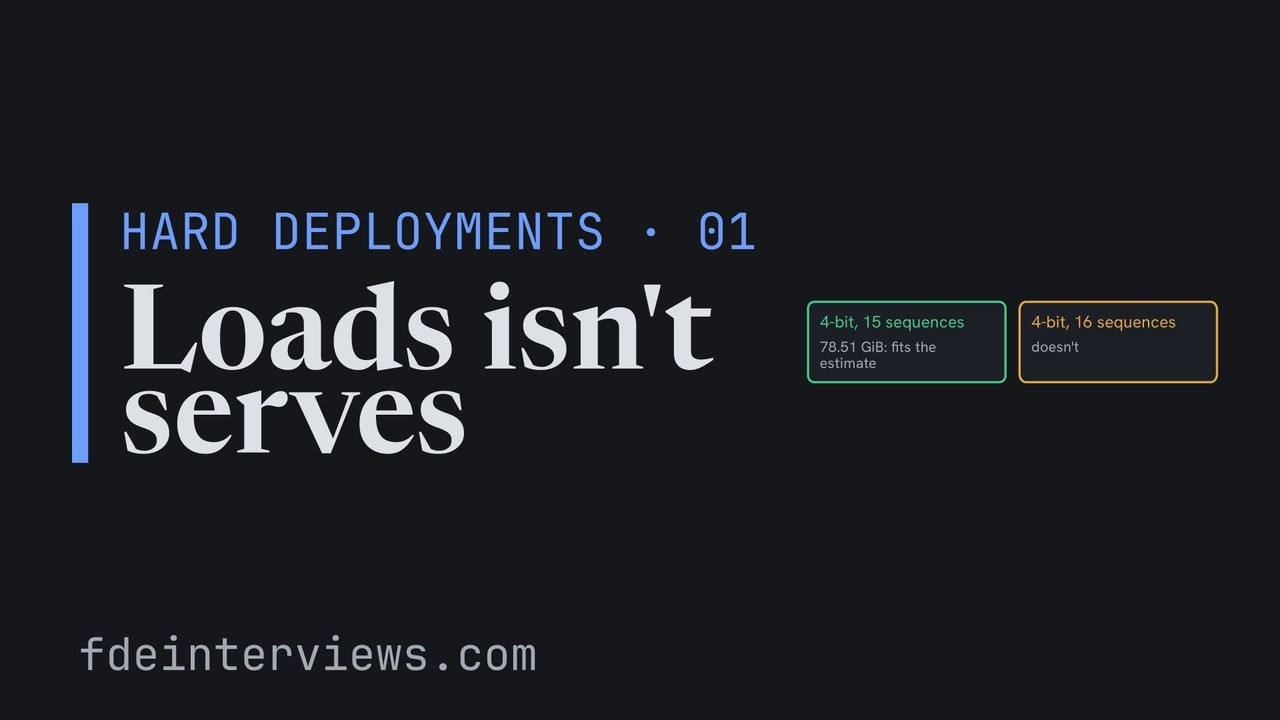 11:38
Hard Deployments 01 · Does it fit? Weights, KV cache and runtime memory in consistent units
Watch the explainer 3:57
Does the model fit? Weights, KV cache and overhead in GiB, worked through
Watch the explainer 11:01
Hard Deployments 02 · Throughput is not latency: queueing, prefill and decode, measured apart
Watch the explainer 12:26
Hard Deployments 03 · Sizing before they buy: a capacity estimate that survives the purchase meeting
Watch the explainer 10:14
Hard Deployments 04 · What your build assumes about the internet: offline dependencies, tested
Watch the explainer 12:17
Hard Deployments 05 · Shipping through a one-way door: recovery inside the boundary
Watch the explainer 14:52
Hard Deployments 06 · Evidence a regulator accepts: make it verifiable, keep gaps visible
Watch the explainer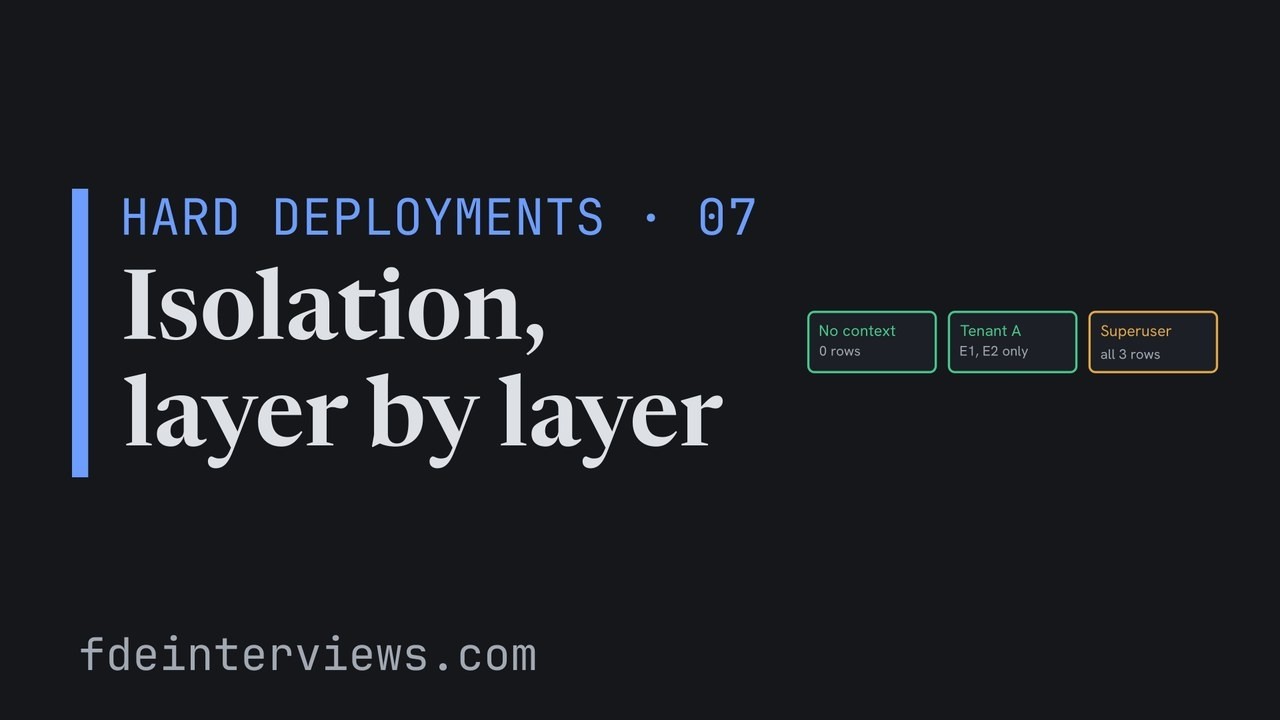 13:06
Hard Deployments 07 · What isolation you actually guarantee: specify and test every layer
Watch the explainer 11:21
Hard Deployments 08 · The tenant who ruins the median: per-tenant evidence, admission and fairness
Watch the explainer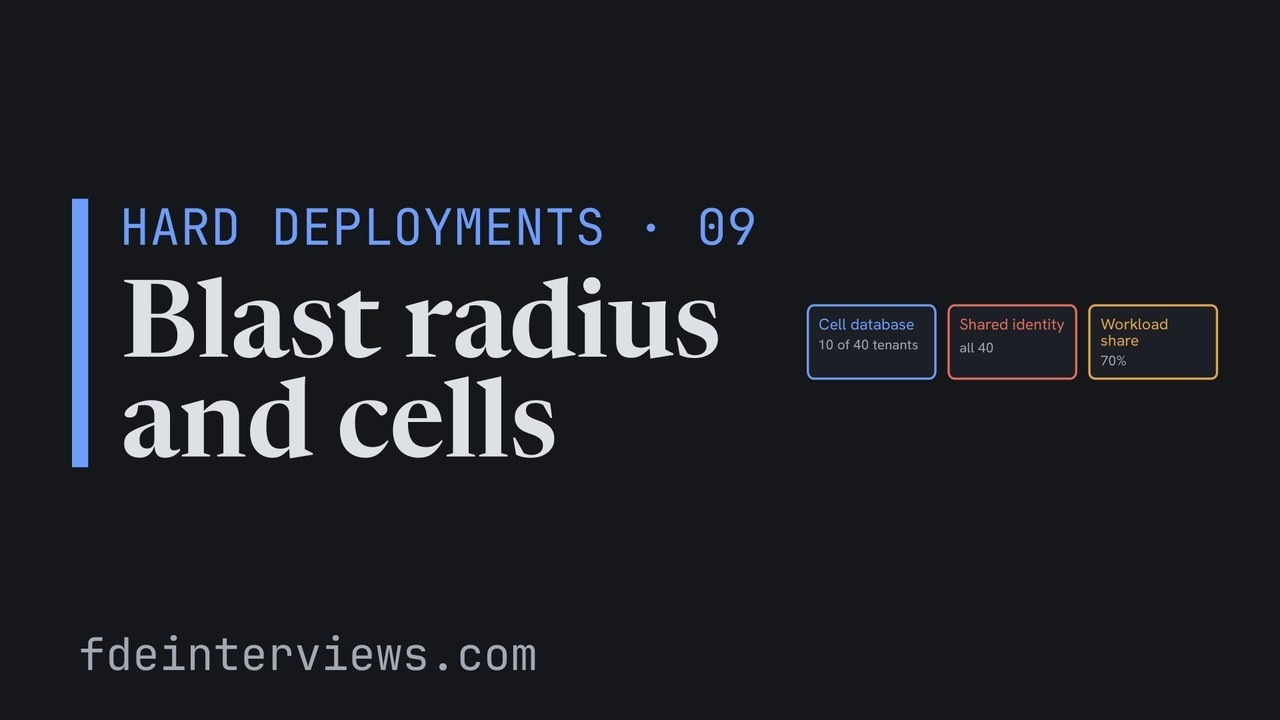 11:22
Hard Deployments 09 · Blast radius and cells: failure scope from dependencies and rollout state
Watch the explainer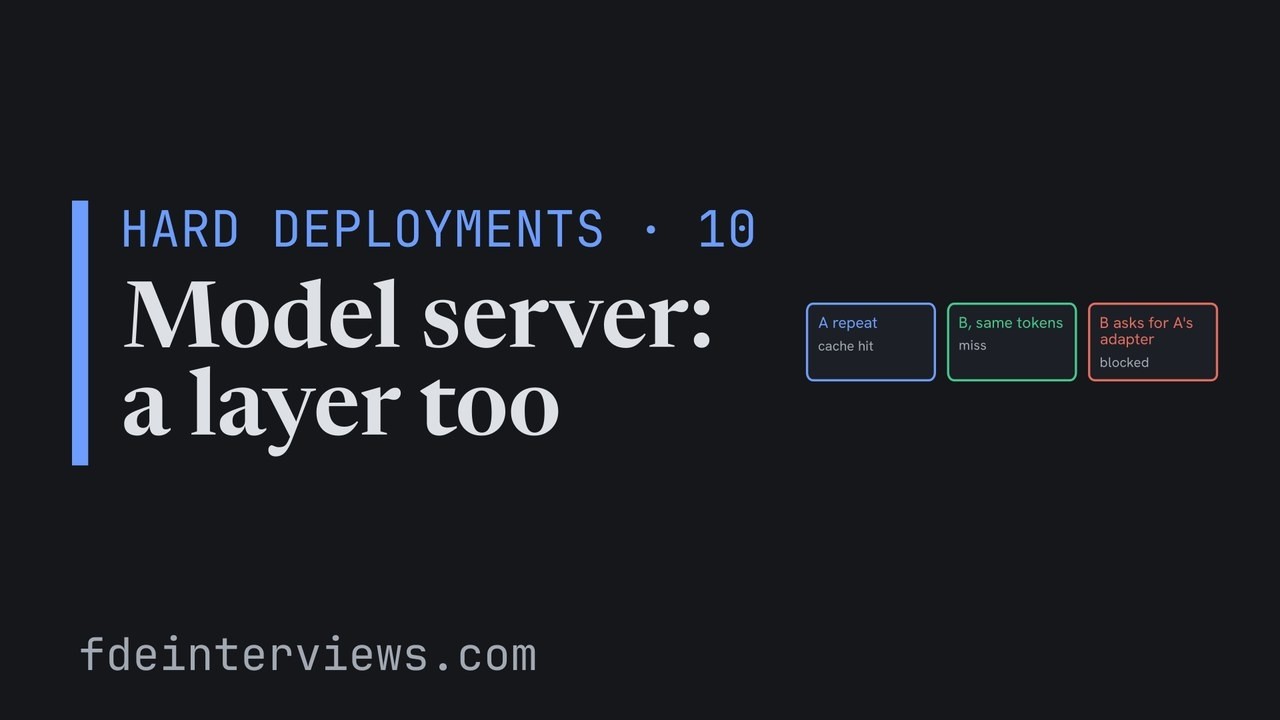 12:21
Hard Deployments 10 · The model server is a layer too: cache, adapter and shared-failure boundaries
Watch the explainer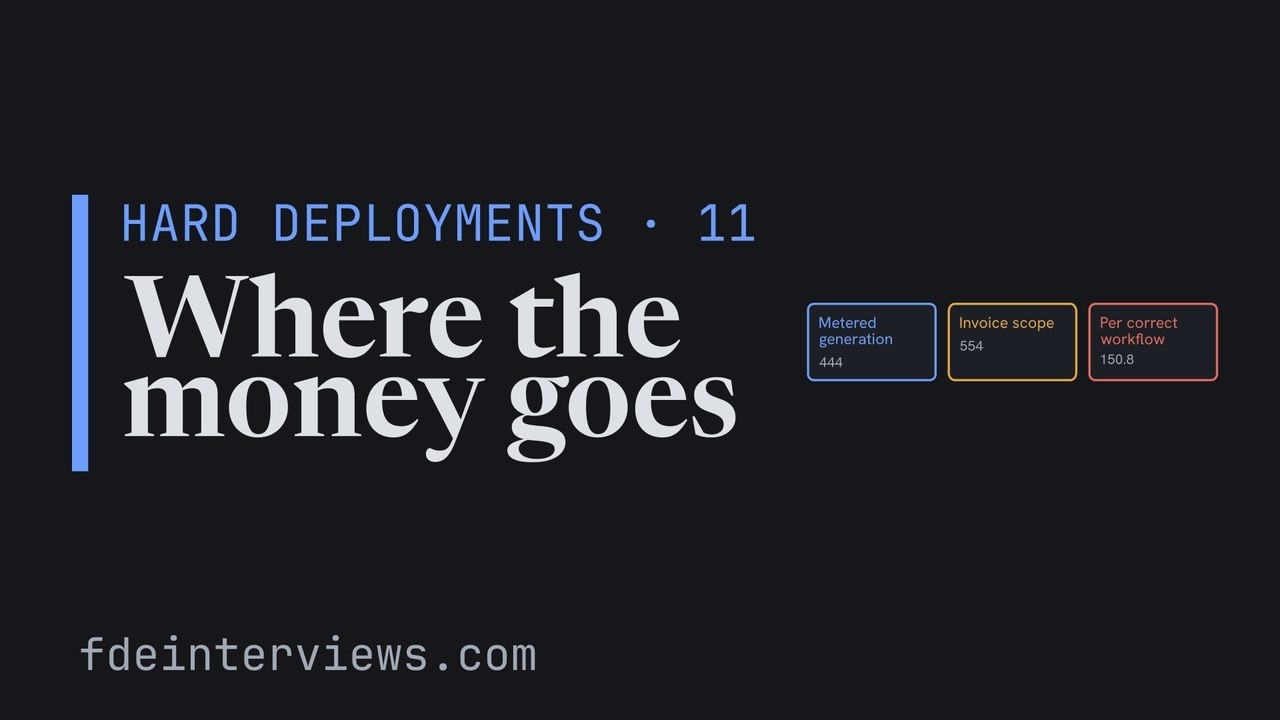 12:56
Hard Deployments 11 · Where the money actually goes: reconcile the bill to attempts and outcomes
Watch the explainer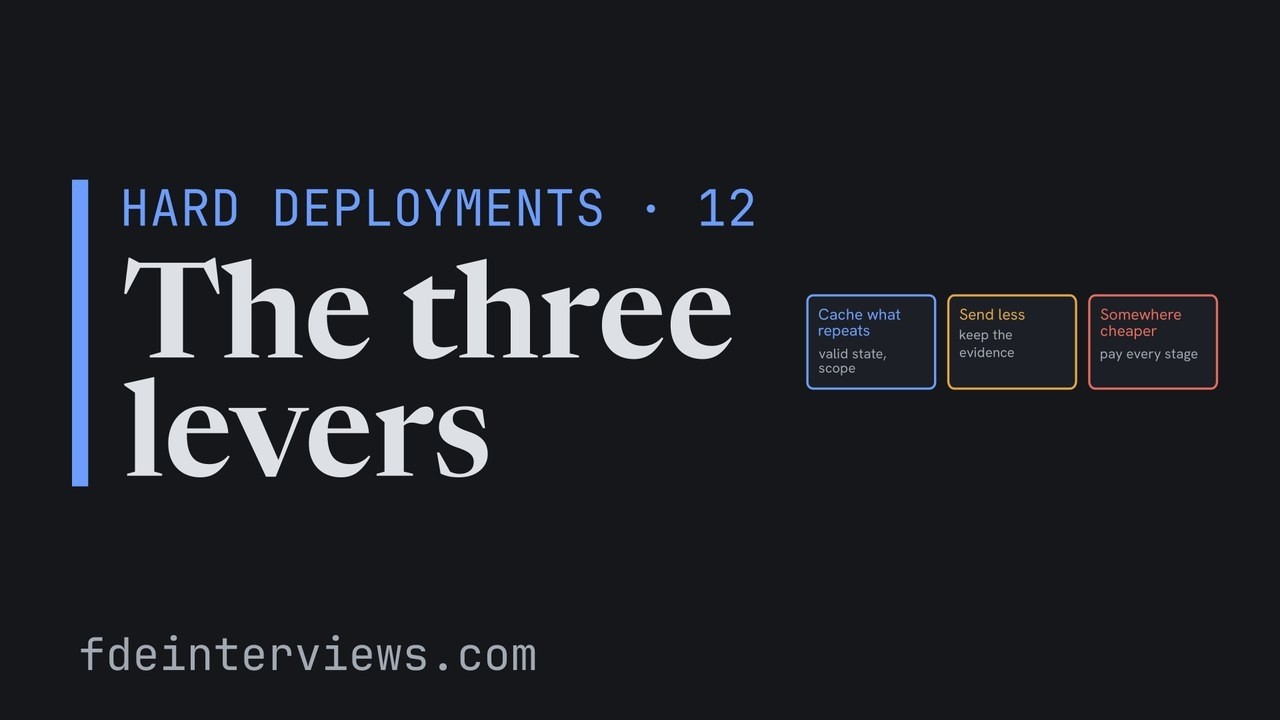 14:50
Hard Deployments 12 · The three levers: cache, send less, or route cheaper without losing quality
Watch the explainer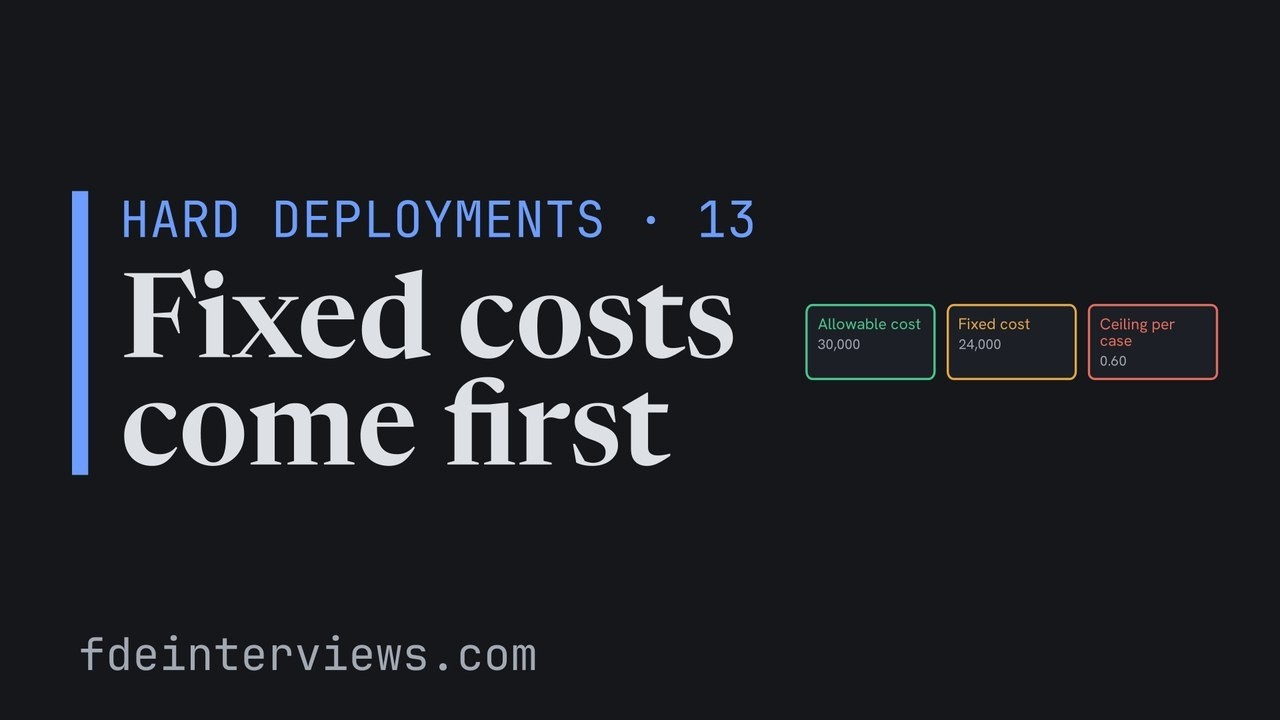 13:37
Hard Deployments 13 · Planning against a price ceiling: fixed costs, margin targets and workload mix
Watch the explainer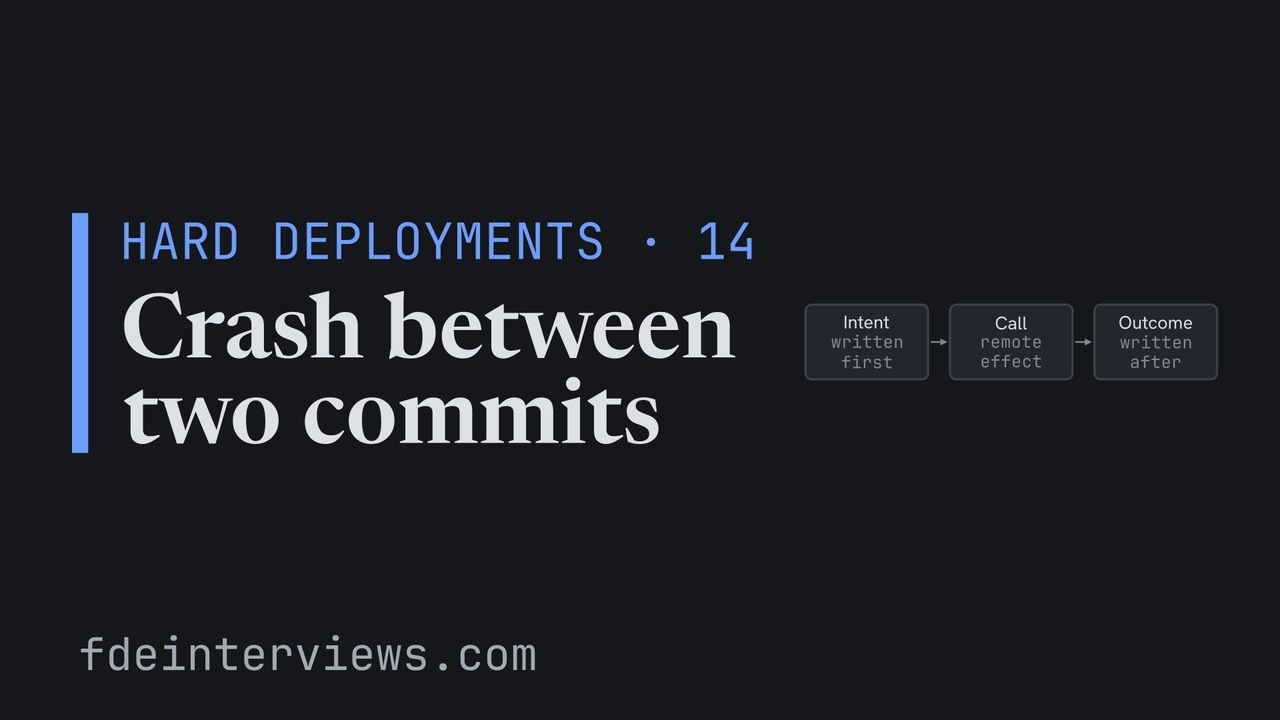 10:50
Hard Deployments 14 · State that survives the process dying: durable intent and unknown outcomes
Watch the explainer 13:12
Hard Deployments 15 · Memory that does not rot: freshness, conditional writes and compaction
Watch the explainer 12:33
Hard Deployments 16 · A fleet of agents, one incident: mix-driven alarms and stop mechanisms
Watch the explainer 15:14
Hard Deployments 17 · The first 48 hours: contain harm, grade evidence, forecast conditionally
Watch the explainer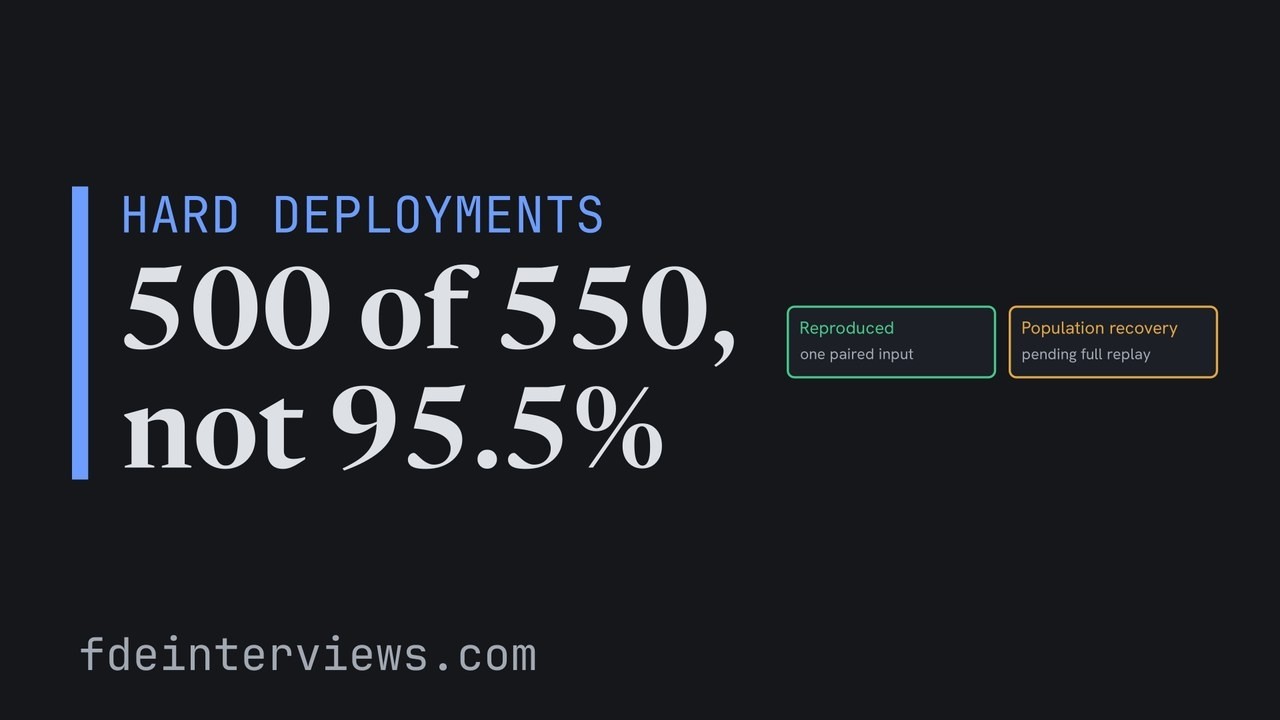 3:54
Rescuing a failing deployment: the first 48 hours, from containment to assessment
Watch the explainer 13:03
Hard Deployments 18 · Proving what happened: forensic queries, denominators and bounded findings
Watch the explainer 13:52
Hard Deployments 19 · The fourteen-day plan: dependency paths, residual work and honest forecasts
Watch the explainer 12:01
Hard Deployments 20 · Service levels across a portfolio: burn rates, empty traffic and change policy
Watch the explainer 13:04
Hard Deployments 21 · Incident command without access: bounded requests, packets and timelines
Watch the explainer 12:17
Hard Deployments 22 · Degradation by design: fallbacks, valid zeros and recovery evidence
Watch the explainer 11:12
Hard Deployments 23 · Finding the abstraction: share mechanisms, keep policy in adapters
Watch the explainer 9:18
Hard Deployments 24 · Configuration over customisation: validate settings, test behavior
Watch the explainer 10:43
Hard Deployments 25 · Migrating off the one-off: shadow comparison, exact approvals, real rollback
Watch the explainer 9:49
Hard Deployments 26 · Evaluation infrastructure for a fleet: one harness, per-deployment cases
Watch the explainer 9:06
Hard Deployments 27 · The field-to-product loop: count, price and propose the change
Watch the explainer 11:16
Hard Deployments 28 · So it does not run through you: transfer capability, authority and judgment
Watch the explainerTurn a video lesson into interview practice.
Pause a worked example and explain the next step yourself. Then try the linked interview questions or continue through the FDE courses with their exercises.